Do’s and Don’ts for Professionals in Family Businesses?
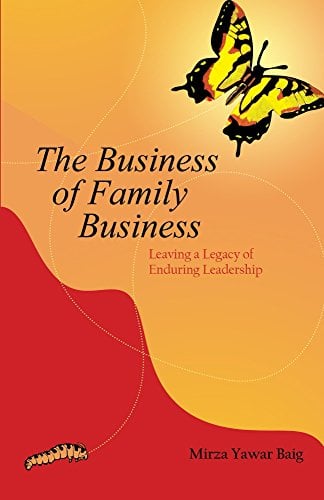
Let me start with some excerpts from the Preface of my book, 'The Business of Family Business', to give some context to this blog which deals with Professionals in Family Businesses.
When a caterpillar looks in the mirror it does not see a butterfly. Yet hidden in that form is the potential to take the epitome of sluggishness and transform it into the epitome of grace, lightness and flight. The only condition is that the very nature of the thing must change completely. Caterpillars have no choice in the matter. People and businesses do. And therein lies the trap. The trap to remain the way you are, eating leaves and grass, crawling from place to place and thereby miss the opportunity to eat nectar and fly from flower to flower at will. Why would someone choose to be a caterpillar over being a butterfly? Because the status quo is always more comfortable and after all, when the caterpillar looks in the mirror, it does not see a butterfly!!! Also caterpillars are friends with other caterpillars because butterflies don’t crawl. I hope you understand what I am alluding to.
Family businesses need a similar transformation if they seriously intend to become global players in the world market. A transformation that is intrinsic, primordial, intense and painful but which then opens the doors into a world that they did not even know, exists. A world of global influence, great wealth and power and the potential to leave behind a legacy that lives on long after the founders have gone the way of all life. The choice is ours. It is not an easy choice. It is not a quick fix transformation that will happen without serious effort. It is not a course of action that will not meet opposition from other caterpillars. However as I said, the choice is ours to make.
Once the choice is made, there are ways to make it happen and that is what this book is about. It is about showing the ‘How’ to those who realize the ‘Why’. If you have not made the choice yet, by all means still read the book – I need to sell the book – but believe me, it will not do you much good. The action is the measure of the intention and without a clear intention and determination to walk the path of transformation, nothing will happen. Nothing significant or worth talking about. I would like to clarify that it is not that if you don’t make this critical transition, your business will suddenly collapse. It won’t. It will more than likely simply plod along. However it is not likely that it will last through more than 2-3 generations, if that. Statistics show that less than 14% of businesses are handed over to the 4th generation. In the West the statistic is a single digit. It appears that Eastern traditions of strong family ties and religious customs and beliefs allow the family to stay together a bit longer. But unless the transition from Person-led to Process-driven is made, the end is the same. The business and family both break up.
I have seen too many business families claiming that they want to make the transformation from being Person-led to Process-driven and then failing to take the tough calls. So I will not fool you or myself. I can show you how. I can’t make you do it nor can I do it for you. Just as the doctor can’t eat the medicine on behalf of the patient. It is your pain and it will go away only when you eat the medicine. Not unless and not until. So do ask the questions to yourself and convince yourself that you do want to take the first step to begin and sustain the transformation and then read this book. The process of transformation that I have suggested has been tried and tested and it works; provided the will to make it work is there. Without that will, simply making a show of transforming will eventually do more harm than good because the pretense destroys credibility and enthusiasm that is almost impossible to regain. As I said, the choice is yours to make.
I have drawn on my own experience of having worked in one of the largest family businesses in India, the Murugappa Group (25+ companies, established in 1900) for a period of 10 years. During the course of this period, for a variety of reasons, I developed close personal friendships with several family members including the patriarch, Mr. A.M.M. Arunachalam who along with his brothers was a member of the Founding Group. He and his lady wife were kind enough to spend a lot of time with my wife and me and told us the entire history of their family and the business, not from the perspective of story-tellers but from the perspective of the history-makers. The fact that I speak Tamil fluently helped as they were both very comfortable talking about their life and its challenges in their own language. This gave me a very deep insight into the complex, often ‘mysterious’ reasons why family business owners take some decisions, especially in our Asian/Middle Eastern cultures. I am most grateful to him and others in that family for this privilege. The foreword of the book is written by my good friend and boss, M.M. Venkatachalam (Venky), who I had the pleasure of working for, for three years. His easy-going, respectful, and highly professional work-style was instrumental in enabling me to achieve what I did in that job.
In addition to this I draw upon my consulting experience with several other business families in India, Sri Lanka, Bangladesh, Saudi Arabia and South Africa which has given me excellent insights into what makes family businesses succeed or fail. It is my hope that those who read this will find it useful and that it will generate healthy dialogue leading to lessons which all of us can benefit from.
This is not a book written by researchers or academics about business. It is a book written by a businessman, me, who started with Rs. 4000 ($40) in his pocket and a dream in his heart. It took me many years, many hardships, many triumphs but I can say with the greatest satisfaction that by the grace of Allah, my dream came true. This book is about carrying this dream onward, so that it lives long after the dreamer has gone. This takes into account my own experience as an entrepreneur and consultant over the last 40 years, on what it takes to build leadership and create successors who can carry forward the legacy we worked all our lives to create. I call this process, building ‘Enduring Leadership™’. Leadership that will endure long after we have gone.
If followed and implemented well this method will result in the creation of winning cultures that will ensure that the vision outlasts the visionary and continues to inspire others.

When 'Family' means someone else
There are many reasons why bright and highly competent professionals choose to work for family businesses over working for global MNCs.
One of the most common reasons that professionals join family businesses is to be close to the seat of power. It is the nature of the family business that key professionals get maximum exposure to the family. This is a source of satisfaction for many professionals for whom a personal touch is important. Being able to influence significant outcomes is more satisfying for some people than doing it themselves. Being king maker is more powerful than being king. In global MNCs actual personal contact with the CEO is rare indeed even for many senior managers. In a family business it is almost daily and at a close personal level.
Another common reason is generally a slower pace of life and more rational working hours. As technology becomes our slave-driver instead of being our servant, this is more and more true. Most managers who work for global MNCs in the East have superiors, key clients and even colleagues who live and work in the US or Europe. So, conference calls which are ideally suited to their timing are the norm. That means the Indian manager must be hooked onto his computer talking shop while all others about him are eating dinner or playing with their children or fast asleep. Yet next morning he must be back in his office in India at 0830 like every one of them.
Another reason is the traveling. Once again it is the Easterner working in the global MNC who does most of the travel. More so as travel has become more and more odious and less pleasurable with all the security considerations. ‘Going abroad’ which used to be a major reason why young professionals joined global MNCs soon wears out its novelty and becomes a drudge. It is not just common but an expectation and a norm that someone from India will take a non-stop or connecting flight to the US (18 – 20 hours), land in the middle of the night in his hotel and be ready to attend a meeting at 0800 am the next morning, bright eyed and bubbly and never mind the jet-lag. I have done this myself enough to know from experience how much of a toll it can take on you. One does it for a while for a lot of reasons, but after that?? So people look for jobs where the only travel they will do is from home to office every day or at the most a couple of convenient domestic flights a month.
Whatever be the reason for your shift, when you decide to go to work for a family business, you may like to remember five things.
If values don’t match nothing else will matter:
Be very clear in your mind about your values and see if they match those of the Business Family. If they don’t, waste no more time and look for another opportunity. If you join a family business which has values in conflict with yours, nothing else will matter for you. You will not do well and will almost certainly come to grief. Ask frank questions in the interview. Don’t be shy to ask anything that you want to have clarified. The interview is also a good place for you to assess how you are likely to be treated once you join. Talk to people who know the family and do your own ‘reference check’ and have the good sense to listen to advice.
Don’t play with your source of power:
Remember that in a family business, ultimate authority lies with the family and therefore loyalty is the cardinal virtue. So never play with the source of your power. That is a battle you can never win, because if you win, you lose and if you lose you lose anyway. Treat the family you are now working for, as your own. Be loyal to them. You owe it to them, because they are paying you well and giving you freedom to make a career for yourself. Be good to them. It is entirely likely that the family member you work with does not have your knowledge or experience. Remember that’s the precise reason why you were hired; to teach the family, help them to become more competent and capable and build a great company. You were not hired to make them feel like fools. I am amazed at how many professionals forget this and go around telling the world what an ignoramus their boss (family member) is. Talk may be cheap elsewhere but here it will be very expensive for you.
Remember that you may call him ignorant, but he still owns the company and even though he does not have your degrees, he is the one who is paying your salary and probably has a personal net worth that is 1000 times your own. So, he must have done something right, eh! Respect that talent, the risk taking that built the business and the capability that enabled him to hire you. If you were more capable than him, he would be working for you, not vice versa. Sure, you have some special expertise for which he hired you. Use it for his benefit, help him, guide him and respect him. Never talk behind his back because the world is round and what goes around, comes around. And then it bites, very hard.
Blood is thicker than water:
Family is about the genes first. Family will always be family. No matter how many times you were invited to the Chairman’s home, you have not become a family member. No matter that the Chairman asked you to ‘think of yourself as his son’; it does not make you his son. His son will succeed him, not you. So, if you are one of those who can’t stomach that, then you are in the wrong place. Learn to take satisfaction from being ‘king maker’ for you will never be ‘king’. Guide the successor, train him, support him and protect him, for one day he will become your boss. And you can still have a great career. After all, if you worked for GE it is unlikely that you could realistically imagine that one day you would be the Chairman.
You work for the business, not for any family member:
Don’t offer to do personal things, even as a favor because this can be misconstrued and then lo and behold you will be seen as a lackey instead of a professional colleague. Don’t fall into this trap. Always keep a respectful distance. Don’t accept too many personal invitations and never loosen your hair too much no matter how much you are encouraged. Under no circumstances should you get involved in any family disputes. Don’t talk about one family member to another. If a family member talks about any other member to you, listen if you must, but make no comments. Don’t take sides because that is not your role. Never discuss the family with anyone. Especially in social circles. Treat the whole family as your client, not any individual member. Don’t become a ‘confidante’. That is not your role.
Trust does not come easy in family businesses. You will need to earn your trust the hard way. Most non-family professionals will be seen as a ‘cost’ and that too a ‘necessary-evil cost’. The onus to prove that you are a ‘value-buy’ is on you. Beware of the founder’s over involvement with detail. In many cases family members, especially founders, have a very close, even fierce sense of ownership of the business and do not see how this attention to minute detail can be seen as nitpicking by others. You will need to have a high degree of tolerance for such behavior and the tact to gently show the founder how he can safely delegate responsibility and hand it over to you. Confrontation does not work. Empathy, understanding and patience, does.
Never lose your edge:

Remember that you were hired because of your competence and ability to deliver results. To maintain that edge, you need to continuously invest in your own development. Never link your development to what the company can provide. Invest on your own and let your boss know what you are doing. Plan your own learning every year and track it. Ask for assignments where you can demonstrate your competence. Participate in international seminars and symposia. Publish and teach. Participate in training both as a learner as well as, as a teacher. Introduce innovative initiatives in the company and with the permission of your boss, make them public. When you do that in conferences, make sure that you give him credit. This is not sycophancy but the truth because without his support and permission to try it within the organization, it wouldn't have seen the light of day. Consciously work to facilitate the transformation from being person-led to process-driven. This will help you to create the kind of climate and culture that you will find personally stimulating. Become a coach and mentor to the family and guide the younger generation to become worthy successors.
Conclusion
Remember that the prestige of the company and the family is your prestige. Show gratitude and do good to them. If you do, you will find that it will come back to you in full measure. It is possible to have a very satisfying career in a family business provided you follow the rules of that world. They are different from the world you came from. Not better or worse. Just different.
For more, please read my book,
‘The Business of Family Business’, http://amzn.to/2ptG4sc
Comments (0)
Please log in or sign up to leave a comment
Loading comments...