Imagine you are considering someone for promotion. Or for membership of the Management Board. Or hiring someone for a job, any job, from a pool of hopefuls who have come to your walk-in interview. If I told you to run a popularity contest and hire the one who turns out to be the most popular, you would give me a strange look, turn away and continue to do what you were doing, i.e., select the most competent person for the job. You would do this whether you were hiring a member of the Board or a doorman; hire based on competence for the job. The question in your mind is and should be, ‘Can he do the job well? What is the evidence for that?’ I have written a book called ‘Hiring Winners’, where I teach you how to hire the best. So, I speak with some knowledge of the subject.

Yet when it comes to the most critical job in the country, the one with the most authority; the one with the most power to do good or evil, we don’t ask for competence or proof of ability to do the job. We ‘hire’ purely based on popularity. We call it ‘democracy’. It is a popularity contest. Democracy today is total idiocy. How can popularity be the sole condition for someone to be appointed the leader of a nation and given enormous power and wealth? We wouldn’t dream of doing this with any other job on earth, but we do it with the most critical, most influential, more powerful job in the nation, without a second thought and we applaud our stupidity and consider ourselves unshackled and free. I remind you that so is someone taking the high jump off a cliff. In free-fall all the way to the rocks below.
If we look at recorded history, we humans have organized ourselves in two principal ways. As monarchies for most of our lives on earth, with hereditary rulers making the laws and enforcing them. That was an exciting time, because the happiness of the population depended on the mood of the king. Alright, not quite as bad as that, but given the shenanigans of some or many kings, I don’t think I am too far from the truth. The upside was that by and large, most kings came trained for the job as that was the one career choice for the Crown Prince – to learn to be king, while ensuring that he remained alive. The career choice of his brothers, aided by their loyal Mammas, was to try to help the Crown Prince attain Paradise ASAP, thereby affording a parking place for the one who sent him Heavenwards. That led to some interesting conspiracy theories, on which have dined many an author once all dust was safely settled. The best thing about this system, in my view, is that there are no elections to worry about, or campaigning, fund raising, or sloganeering. The King did his job, aided ably or otherwise by his advisors and nobles. Some ceremonial jobs, like meeting disgusting people who he wouldn’t have met for love or money but must do so because he is King and they are head of some state across the pond, and what’s more pretend to like them. Playing Hollywood actor, wearing furs and gold and silver to give others vicarious thrills, cut ribbons, wave gracefully from the window of your non-airconditioned golden carriage at the great unwashed multitude. If you think all this is easy, try it. Other jobs, unstated but essential. Chief being, guarding your back especially from those who claim to love you.
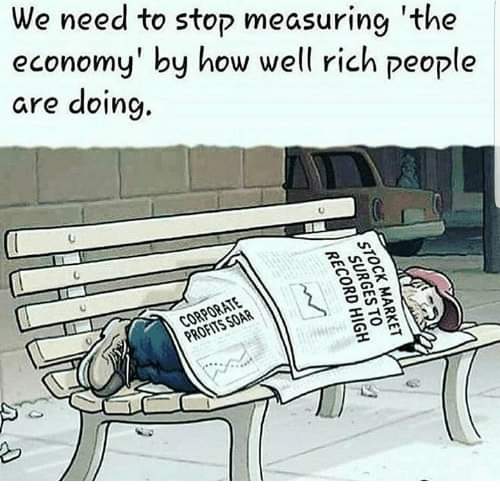
As for you, Mr. and Mrs. Tom, Dick, and Bihari, you put your head to the wheel and kept your nose clean. If you didn’t like the current establishment, you just waited for the announcement, ‘The King is dead. Long Live the King.’ They didn’t need to say, New King, because even they couldn’t bring the dead back to life. As for aspirations for the top job or the yearning to participate in decision making; that was a good way to get to the high jump. You kept your head down and accepted whatever came your way and consoled yourself with the truth that it could be worse. History is witness.
As for democracy, compared to monarchies which lasted for close to 4000 years, modern democracy has been around for just about 250 years, if one is to go by the age of the oldest of them. And in that time, though we continued to call it democracy, it changed its form like an actor between scenes. We blame ancient Athens for democracy but if Themistocles or Pericles witnessed what happens in our countries in the name of democracy, they would ask us what was happening. If we told them that we had learnt it from them, they would be astonished. This is not criticism nor even difficult to understand. The world has changed in a way that for ancient Greeks would be akin to going to another planet. Athens, we are told, had a population of around 300,000 out of which only 30,000 were eligible to vote and out of that only about 6000 voted in a normal election. About 10,000 voted in an emergency. We are also told that voters knew candidates personally. Given the numbers, that is entirely possible and understandable. That meant that people had a chance to assess the capability of the candidate to represent them satisfactorily and could hold him accountable if he didn’t. Women didn’t have the vote, so my use of only the masculine pronoun is not a sign of toxic masculinity. That was Athens.
Today, where I live, in Hyderabad, in the Jubilee Hills constituency, in the 2023 Legislative Assembly elections, there were 3,85,287 registered voters. That is more than the entire population of ancient Athens. And unlike in Athens, every one of them is a registered voter. The magic of Universal Suffrage resulting in Universal Suffering. Therefore, not only is it impossible for them to know the candidate personally but given the pace of life today and daily struggles that the average Indian voter goes through, it is impossible for them to even try to know the candidate. Add to that our social norms, customs, hierarchies – we are still a very feudal society where it is almost impossible for a poor person doing an essential but menial job to meet an election candidate and have some time to talk to him. Which leads to how we vote – based on the confluence of our caste (religion, sect) and the caste of the Candidate. If the two meet, we vote for him. If they don’t, we don’t.
The lifespan of the candidate is five years in India and some similar single digit number in all democracies at the end of which the candidate must stand for election again. Given that the candidate must influence the number of people they allegedly represent, and that it all costs lots of money, three out of the five years, goes in raising funds, and campaigning. Trying to convince people to make the same mistake again and again. Add to this the need to recoup the expenses incurred in the last election without any certainty of returning for another term and not having access to ancestral treasure, the only option is to become conducive to those whose deep pockets are matched by their bottomless appetite. Who give with one hand but take with both. That is the root of what has many names, of which the one that leaps to the fore is corruption. The combination of being elected based on popularity, not competence, qualification or ability to perform the job, a short and precarious lifespan, and the pressure to satisfy those that put you there in the first place, is not the recipe for good governance. I am not letting the politician off the hook but putting his plight in perspective. As you must have guessed, not the least because you have learnt from experience, the casualty is good governance and you are the victim.
Having said all of the above let me hasten to say that this article is not just a lament. I have a solution. Or I must say, we all have a solution, but we have perhaps not looked at it in that light. The solution is; to use the principles of corporate governance, for political governance. We don’t hire people for corporate jobs based on their popularity in their communities or society. We don’t promote people based on their popularity with their colleagues. We kick dishonest and incompetent people out without a second thought. We don’t terminate a competent person doing a great job just because they have been doing that for 5 years. We don’t hire a person for a job and not train them while they are in service to help them do their job better. We should do all this for our governments.
Governments are meant to govern. The primary and indeed the only focus of any government must be good governance. This must be concerned, even restricted to, the following areas. The economy, education, healthcare, national security, and transportation. Nothing else. Not what people eat, how they dress, who they worship, who they marry, in short, nothing that qualifies as their private lives. That is not governance and being concerned about these matters and spending time, effort and resources on them distracts from the core concerns that I mentioned above.
What any good government must seek to do is to build a strong economy, an educated population which is healthy and has access to good healthcare at a reasonable cost (ideally free), smooth and safe movement of goods across the nation to ports or markets, and a country that is safe, internally and internationally.
To do this, people should be selected, not elected, based on the same criteria that we use in the corporate world, on indeed in any sane, logical, sensible place of employment – the education, competence and experience to do the job. There is no other reason why anyone can or should be hired for any position in government, just as it is in the corporate business world. There is a reason that corporations work far more effectively and efficiently than almost any government. And that is because they are designed to achieve clear goals and only hire and appoint people who can help them do that. To be popular is not a crime. It is a nice-to-have quality for someone who is qualified to do a job and has the experience to do it. But it is not the reason you hire anyone. You wouldn’t hire a popular carpenter to fix your kitchen sink which needs a plumber, so tell me why you believe a comedian would make a great head of state? Unless that job is a joke.
If we organize government as we organize business entities, we will save ourselves humongous amounts of money that is currently spent in elections, both legitimately and illegitimately. We will save ourselves the time, effort, and energy that goes in canvassing, campaigning, and eventually organizing an election. We will save ourselves the aggravation, polarization, interpersonal conflict, violence, and the aftermath of all that, post elections. And we will have a country that runs efficiently like a good business. No more politicians and no more paper pushing bureaucrats. Just qualified people doing the job for which they trained and are experienced in.
To begin, a Constituent Assembly will be formed consisting of 12 of the most eminent people in the country drawing from all walks of life. They will recruit the first Governing Council and one level below them. These will be the people who will head each Division/Ministry of Government. After this recruitment, the Constituent Assembly will remain purely as an advisory body and will not take part in government. Each Division/Ministry will propose to the Governing Council, its recruitment plan for its own people as necessary and will proceed upon approval. The same procedure of proposal and approval will be followed for annual budgets and longer term plans. It is not my intention to go into details in this article but those can all be outlined when necessary.
This new government will be comprised of ministries of different functions, like Commerce, Finance, Home/Interior, Justice, Education, Health, Foreign Affairs, Defense, and Transportation. The heads of ministries will form a Governing Council headed on a rotational basis by the head of each ministry. The Governing Council will meet periodically and administer the nation collectively without any individual having supreme authority. No Kings. No politicians pandering to vote banks or amassing funds to pay for the next election.
The career path for those aspiring to public office would be as follows. You study for the office you aspire for. Then you intern with that office. Then you apply for it, pass tests, and interviews and are hired on probation. And eventually you are confirmed. You have annual performance reviews, you are coached and mentored as necessary, and you do your job without worrying about whether you will still have it next year. You will if you earn it. You won’t need to win a popularity contest for it. Just work efficiently and sincerely. Now, that’s not such a bad thing, is it?
Which brings me to the final question, what about making laws? Who will do that in this brave new world?
There are two kinds of laws. Administrative laws for the efficient running of the nation. These will be made by the Governing Council. As for laws that impact on the fundamental rights and freedoms of the people; these will be made after a referendum of the people. Normally these are rarely made when you start off with a robust Constitution. When such a law is needed, the Governing Council will propose and conduct a referendum. That’s it.
I am writing this with the principal aim to hopefully start a discussion about the need for a different form of government from what the world has tried for about 250 years now and found sadly deficient. Today we are at risk of being hijacked by oligarchs. Before that happens, it is essential to create something that protects the rights of people and is truly of the people, by the people and for the people.

Comments (0)
Please log in or sign up to leave a comment
Loading comments...