
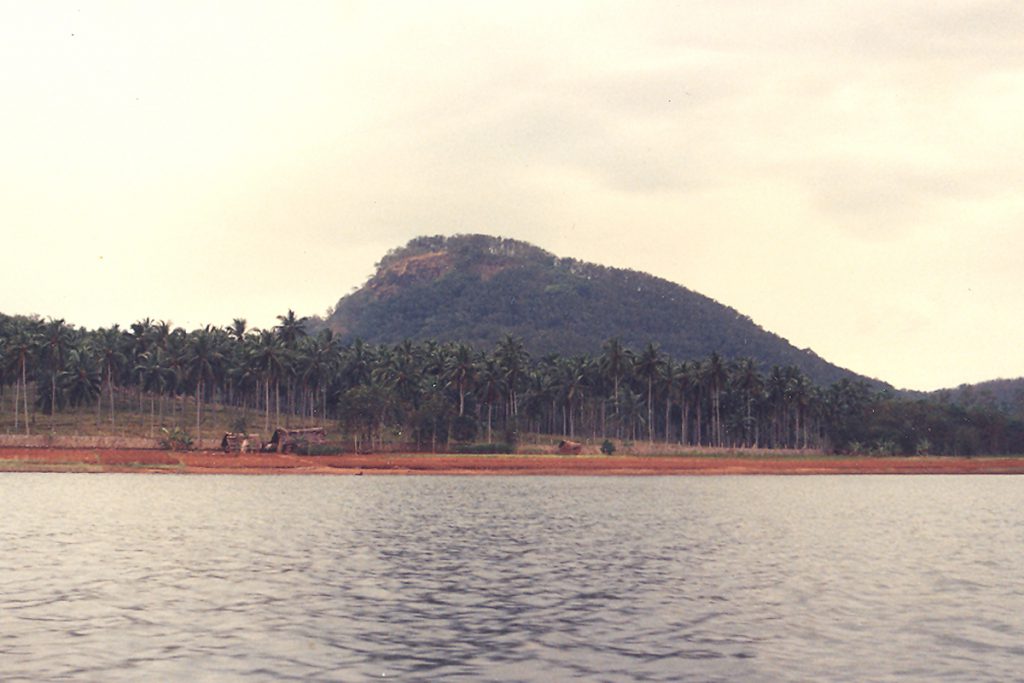
Ambadi borders the Chittar Lake, which was created by damming the Chittar River. There are two reservoirs, Chittar 1 and 2 near Pechiparai village and the waters irrigate land in Kulasekharam and Marthandam. The Chittar River runs through Ambadi. All this is important because it taught me the lesson, ‘You can’t control the flood, but you can control its aftermath.’
It was December 5, 1993. My wife and I had gone to Nagercoil to dinner at the home of some very dear friends. It had been raining heavily but we were used to rain in the plantations and the Nagercoil, Kulasekharam road was reasonably good and we traveled on it all the time and so we did not give it much thought. After an excellent and leisurely meal, as we were leaving, my friend’s driver said to him, ‘Tomorrow there is a bandh (total shutdown in which roads are blocked and markets are shut) organized by BJP and roads will be blocked. How will they go home? It is not safe in the night?’ Our friends advised us to stay back. I didn’t agree because it was our culture in the plantations that we never spent a night away from the estate unless we were on planned leave. I said to him, ‘Santiago (my driver) is a good driver and we will get back. Don’t worry. We will call you after we get home (no mobile phones). But let us leave without any more delay.’ And we left.
It was a tense drive because we didn’t know what we would see around each corner. Coming upon and trying to cross a roadblock set up under these circumstances, could potentially be lethal. I was far more concerned about the safety of my wife. But she wouldn’t even consider staying back with our friends and allowing me to go back in the night. Sure enough, after a few miles, we saw the roadblock. They had piled rocks and tree trunks, no shortage of either in that area, to make a wall about 3 feet high across the road. Santiago stopped the car. I got out and looked around. It was close to midnight and still raining so the makers of the roadblock had gone home and would return the next morning to man it. Thankfully for us, the location of the roadblock was in a place where, by removing some rocks and dragging away a tree trunk at one end of the block we created enough place to scrape by. That is what we did. There were no other blocks after that and as we turned into the small lane that led to the Ambadi gate, I heaved a sigh of relief and having ‘made it.’ But that was not to be.
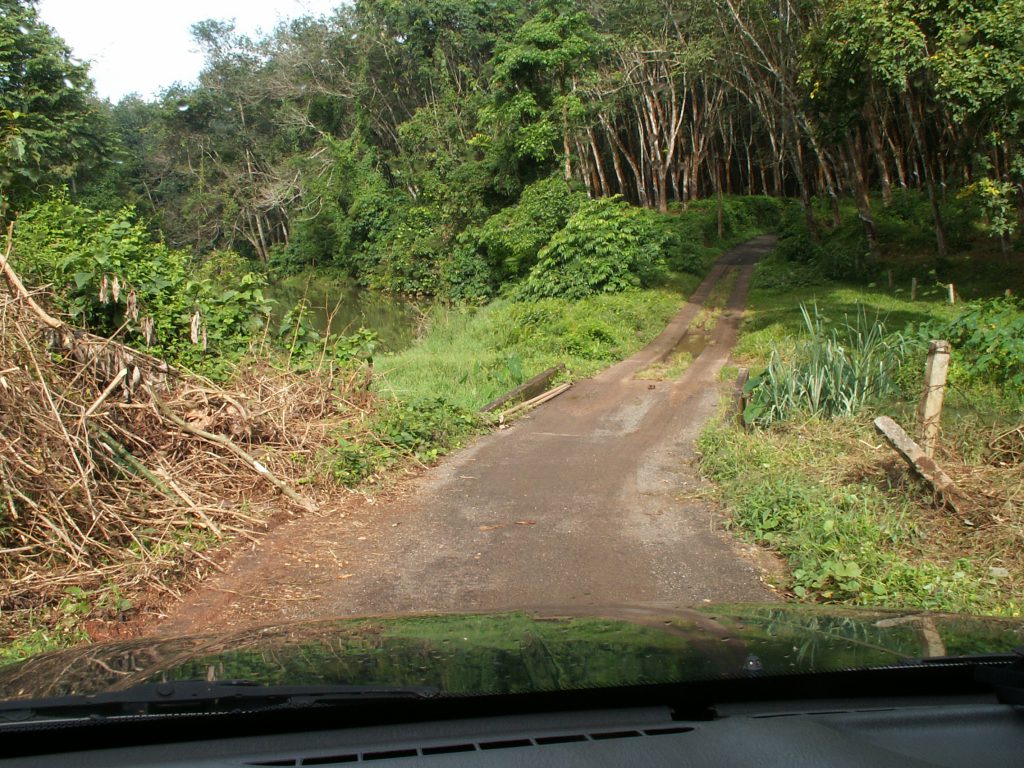
Just inside the Ambadi gate, flows the Chittar River. The river normally has less than a foot of water flowing in that place and so there is no bridge across it. There is only an ‘Irish drain’ or causeway under which the water flows throughout the year. Even in the monsoon there was never more than a few inches of water flowing over it and you could easily drive through it. But that night, something was wrong. There was a mass of water, which looked black in the night, flowing very fast across the causeway. The causeway itself was totally covered and invisible. All we could see was the road where it came out of the water between us and the other end. As I mentioned, it was still raining, Santiago and I were already soaked and couldn’t wait to get home. Santiago tried to drive through the water, but the water rose around the car and we could feel the force of the water. Then the engine stalled. I could see that Santiago was panicking. I told him to move over to the passenger’s side and climbed into the driver’s seat from where I was sitting in the back.
That is where the beauty of the Hindustan Ambassador internal cabin design was such a help. The Ambassador has no frills. Unlike modern cars which have a whole console between the driver’s and passenger’s seat over which it is simply impossible to climb, in the Ambassador there is a straight-backed, non-reclining bench seat in the front and another behind. Each is supposed to seat three people. But in a pinch, you can easily fit in a few more. Climbing over the back of the front seat onto the driver’s side was a simple maneuver. Then I put the car in reverse gear and turned the ignition key. That way every time the starter took a turn, the car moved back a foot or two. This doesn’t do any favors for the starter which may get totally burned out, but in our case, it got the car out of the main flow of the river. Given the force of the flow and the fact that the river was carrying debris including uprooted trees, if the car had been left there, it was only a matter of time, before it got washed away. Flowing water has force that is difficult to understand. Especially flood water which is heavy, laden with silt and debris being carried down with it. Fast flowing water is mesmerizing and if you look at it, it seems to draw you into itself. You feel dizzy and disoriented and especially in the night, you can lose direction. I was about to learn all these lessons very personally.

The car came out of the water and we were back on dry land but on the wrong side. The next day was expected to have serious conflicts with violence. Police were on high alert and armed police had been deployed in the towns. But where we were, we would be on our own. Not good news for us, as we are Muslim and likely to be targeted. There was nowhere to go as roads were blocked. We had just come through one. All this was going through my head as I stood there in night in the rain which no longer made a difference, because you can only get so wet. After that it is water off a duck’s back. As I saw it, there was only one way and that was forward. We couldn’t drive, so we would walk. We would cross the river and then walk back to the bungalow on top of the hill which was about mile from the gate. In hindsight that was perhaps a very bad decision and one I definitely would not advise you to take. But then most people don’t live my kind of life, so you are safe.
As all this was happening, Srikantan Nair, one of our estate drivers, who lived in a house just by the gate, came out of his house. He woke up to the sound of the struggling car engine and was astonished to see my wife and me. I told him what we planned to do. At first, he told me that attempting to wade across the river was an awfully bad idea because we had no idea about the force of the flood water or its depth. Also, as we were crossing if a tree trunk came on the flood, we had no hope of avoiding it and would be swept away. I listened to him but refused to change my mind. It is a measure of the man that when I insisted that my wife and I would cross, he swept up his lungi and said, ‘I am coming with you.’ I was astonished and tried to dissuade him. I used all his arguments against him. He said, ‘Either you stay here, or I am coming with you. I can’t let you and Madam go alone. What if something happens to you?’ The world has some lovely people and Srikantan Nair is one of them.
We started with Srikantan Nair leading the way. He insisted saying that he knew the way better than all of us as he lived right next to the causeway. As it turned out, he was right, and we were very fortunate to have him lead us. It was necessary to know the exact topography because one wrong step and we would step into the river and there would be no second chances. I was held Srikantan’s hand and my wife held my other hand. We moved slowly, feeling with our feet. We couldn’t see anything in the dark night and darker waters. Santiago decided to stay back on the other side, with the car. He kept the lights of the car on, so that we had some illumination. There was no moon and the night was dark and silent, except for the sound of rushing waters. As we stepped into the flooded river, the water rose up Srikantan’s and my thighs and until our waists as we entered the main and deepest part of the causeway. I looked back and saw that the water was chest high for my wife. But though she is very slightly built she has the heart of a lioness. Fast flowing water has huge force. In the night when you are waist and chest deep in fast flowing water, it totally disorients you. As my wife recalls, ‘I thought the track was in one direction, but it was actually in a totally different one.’ I realized the wisdom of Srikantan leading because he knew that path very well and didn’t lose his sense of direction. We were protected, because even though there was a lot of debris, tree branches and trunks, rushing along in the water, nothing came as long as we were in the water. All it would have taken is for one trunk to come downriver and we would have been history. How full of silt the water was we only realized when we walked out on the other side because we looked like we had been painted in brown with the mud that coated us from the waist down. We walked to the factory where Srikantan started one of the small trucks and drove us home. What a night that was.
The story did not end with that. I was informed the next day about why the causeway had been flooded. Thanks to the excessive rain, Chittar Lake was full, and the overflow had flooded the river. The river rose dangerously and tore at its banks and the silt laden waters, uprooted rubber and other trees along the banks. These waters, laden with silt and debris, flooded villages along the river, in some cases washing away entire houses with inhabitants and their possessions, never to be seen again. The flood caught most of the people by surprise because it all happened at night. There was tremendous devastation. The Ambadi factory was flooded with water almost up to the lintel level. We managed to get all the vehicles and moveable things out to higher land but the rest of the factory with the rubber stock in it, was flooded. A large part of our rubber plantation along the river was damaged with trees close to the river being uprooted and, in many cases, washed away.
The day after, I surveyed not only the estate but drove along the course of the Chittar to see what had happened in the villages which were our neighbors. I was shocked to see the extent of damage. That is when I took a decision that we would help these people. These were not our estate workers. Our estate workers were not affected because they lived in Kulasekharam and not along the river. These people were strangers to us, but I saw it as our duty to help them. As it was, the telephone lines were down, and we were cut off from everything for a few days. I asked Mr. Prem Kumar, my Field Officer and also an office bearer in the Staff Union, to procure two truck loads of rice, one truck load of clothes (for both men and women) and two truckloads of coconut fronds which are used to thatch roofs. It took us a day to organize all this. I had no formal sanction to spend this money, but I knew my boss, well enough to know that he would support me totally in this. If I recall, we spent something like Rs. 30,000 which in 1993, was a large sum of money.
Then I informed the local MLA (Member of the Legislative Assembly) and my friends, the Assistant Superintendent of Police, and the Assistant Collector, that I was planning to distribute food and relief material to the people affected by the flood. It is always good to keep the District Administration in the picture as well as local politicians. The latter will try to bask in the limelight and pretend that they had been the prime movers behind the largesse, but everyone knows the truth, so no harm in massaging some egos. The following day, we set out in procession with my Gypsy leading the way, followed by the convoy of trucks. We stopped at village after village along the way and distributed rice and clothes and palm fronds. What impressed me was the calm and orderly way in which people who had lost everything, came to take what we had to offer. No pushing and shoving, no noise. Just people naturally standing in lines and taking what we gave them with great dignity and believe it or not, with smiles on their faces.
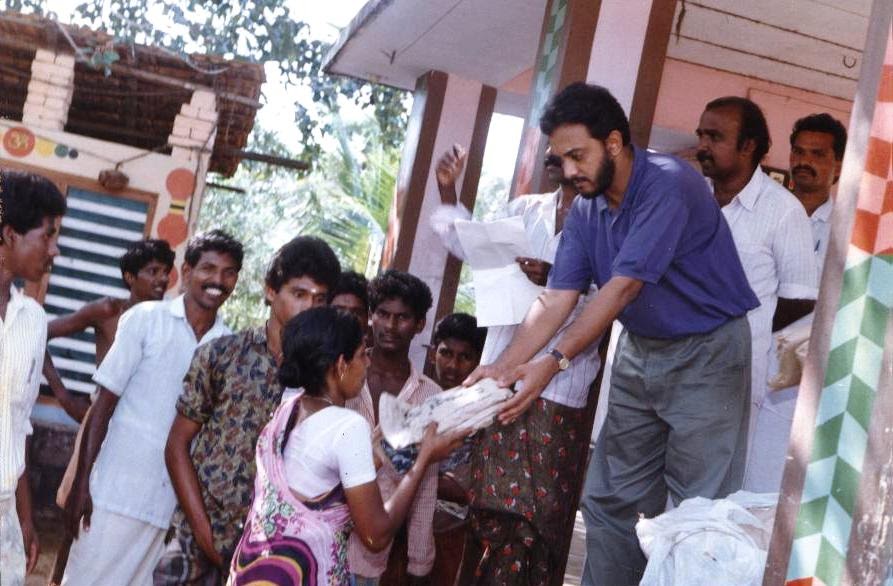
As I gave them these emergency supplies, I was struck by how much pleasure there is in giving. We worked straight through the day and well into the night, ensuring that everything that we had brought had been given away. We drove back to Ambadi in the night, totally exhausted, my back a solid mass of pain, having stood all day and lifted rice bags on occasion. But I can tell you that I have seldom been happier. Through all that devastation came some good. Actually, a lot of good, as you will see. Read on.
It was a few days after this that the news started. All estate managers worth the name have an ear to the ground because local news is critical to survival and forewarned is forearmed. As one of our friends, who was also a planter used to say, ‘If a bird flies across your estate, you should know if it was a male or female.’ He was not talking about ornithology. The key is communication. If you talk to people, you don’t need a web of spies to tell you what is going on. That is how I got the news and it was not good.
Politicians are amazing creatures. They are focused on one thing only and that is their own re-election. In this case, one of them had the perfect idea of instigating people who had lost their home and land in the flood, to encroach on the rubber estates and simply occupy large acreages. They were very clever in the way they did it. They came in large numbers, in the late afternoon, a couple of hundred at a time, so estate watchmen or guards didn’t have a chance of stopping their ingress. They came in trucks with all the material they needed to build sturdy huts. In a few hours, they occupied the land, cut down the rubber trees, built huts, dug drains, planted vegetable gardens with yams and banana trees, bearing fruit. If you saw what they had done, the next morning, you would have been convinced that you were looking at a village that had always been there. That was the idea. That would be their claim when the police and district administration officials arrived in their own good time on receiving complaints of land encroachment. They would say that they had been living there for years. The case would go to court. Given the speed with which justice is done in Indian courts, you can say that it is as good as losing that land permanently. Meanwhile the politician who instigated all of it would get elected and would ensure that these people were never evicted.
My staff were very worried. Some people advised me to apply for armed guards to guard our property. I refused. What was the use of armed guards? We couldn’t and would never shoot unarmed people, encroachment or not. The fact is that if two hundred people decided to invade your estate, there was nothing you could do except to watch them do it. These were pretty tense days because losing a part of the estate was not an easy thing to contemplate and would leave a taint on the manager’s career; in this case me.
Then one day one of my labor leaders came to me and said, ‘Saar (in Ambadi they didn’t call the Manager ‘Dorai’), Ambadi is safe. They won’t come here.’ I was delighted but very surprised.
‘Why not?’, I asked him.
‘Saar, they are saying to the Talaywar (leader), ‘He (meaning myself), fed us when we had no food. He gave us clothes when we lost everything. He gave us material to build our houses. How can we go into his estate? We have eaten his salt. We can’t betray that.’ And no matter what the Talaywar says to them, they are not budging. ‘Tell us any other estate and we are ready. But not Ambadi Estate.’
I breathed a sigh of relief at this totally unexpected boon. As they say, ‘What goes around, comes around.’ The people stayed true to their word and even though there were many instances of major encroachments all around Ambadi, not an inch of our land was encroached.
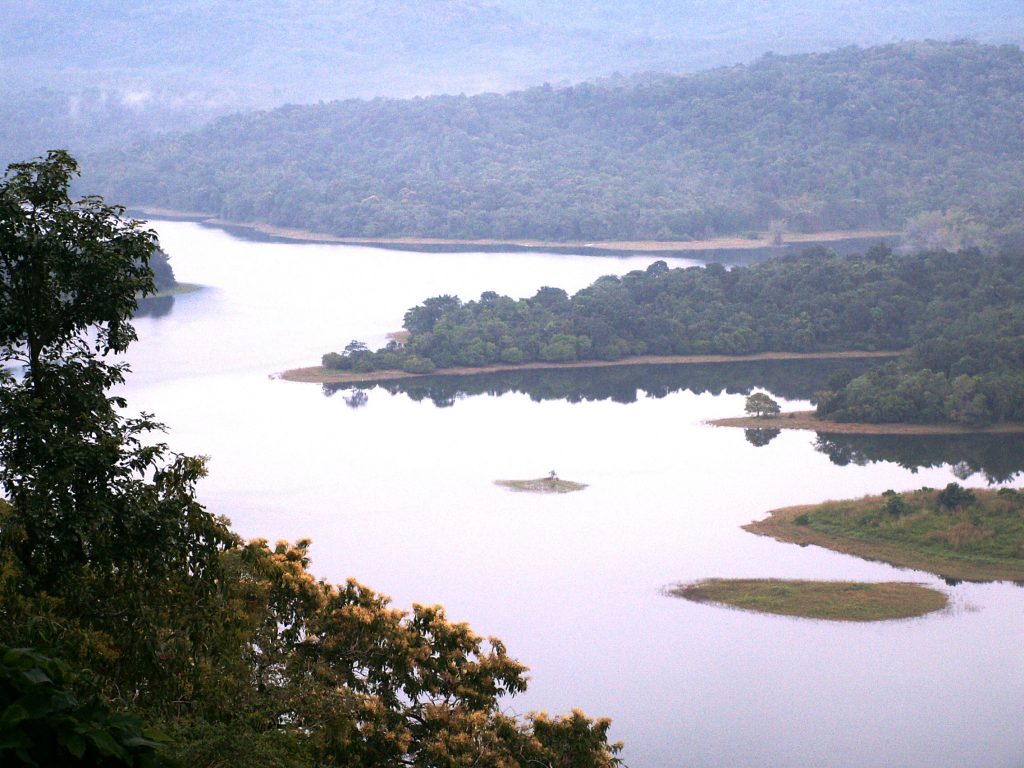
In Ambadi, the Manager’s bungalow, where we lived, was on the top of the hill or almost on top. The driveway curved around the bungalow, past the servant’s quarters and garages and the stable of my horse and up the hill until you came to a gate. Then the road dropped down to the waters of Chittar Lake. There are some amazing views of the lake from the top of the hill. Almost at the bottom of that was our coconut nursery. We had some Malaysian semi-tall trees with coconuts you could pick simply by reaching up from the ground, the water of which was so sweet that you would perhaps think that someone had injected sugar into it. The nursery also had cocoa trees, cashew trees, a few clove trees (one of the most beautiful trees) and of course, lots of coconut trees. Along that side of the hill were teak trees, some of them full-grown and so extremely valuable. That is why I had a couple of guards with dogs, stationed in the nursery with instructions to patrol that area in the night as there was always danger of theft.
In the winter that year, there was a course being offered in Mysore on understanding the unconscious. The course was facilitated by Michael and Alexandra Merrill, from America, who were famous for these workshops. I decided to attend, and it was one of the most meaningful experiences of my life. My wife was not interested in the course and so she stayed back in Ambadi. Communication between Mysore and Kulasekharam was not the best in the world with our phones in Ambadi being on the lam most of the time. While I was enjoying the course, I was concerned about my wife as she was alone in the estate. Of course, that is not like being alone in a city. In the estate, everyone is family. I knew that my assistants, Suresh, Roshan and Sunil would call on her some time in the day, every day and check to see if all was well. We had excellent staff; Perumal the cook and butler, who cooked far better than he buttled. His dosas were legendary. There was Santiago’s wife who was Perumal’s assistant. And other servants. And there were Bonnie and Hooch. Bonnie was our Doberman, brown and female and about 90% human without any of the bad human traits. Hooch was our Rottweiler. Perhaps the most intelligent dog I have ever had. I trained him in one week flat, which any other dog would have taken at least a month or more to learn. Hooch, despite the fearsome reputation of his breed, was the gentlest individual that you can imagine.
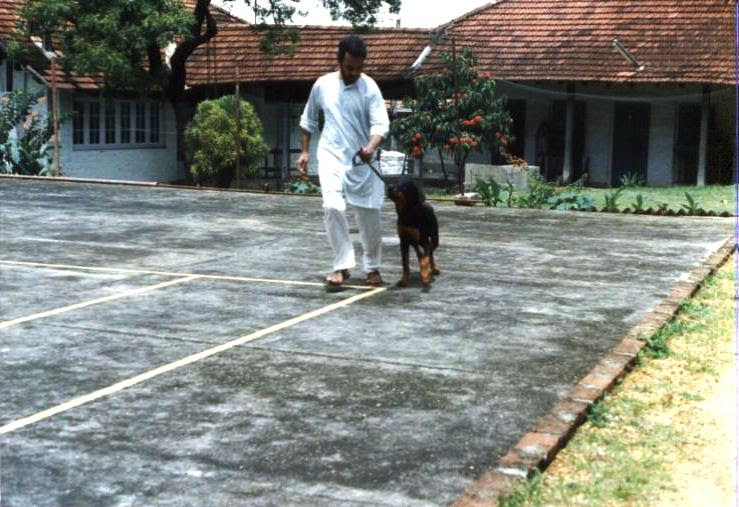
Suresh and he had a unique relationship. Suresh would come to the bungalow. Hooch would hear his bike and lie in wait for him at the top of the staircase coming up from the side of the tennis court (yes, we had a full-size concrete court). As Suresh came up to eye level, Hooch would stand up and with his head held low between his shoulder blades, would stare at him. Suresh would stop and stare back. There they would stand, staring eye to eye, neither of them blinking. It was a test of nerves for both and they both loved it. If you have ever tried it, animals can’t stand the human stare. They will either look away and back off or in the case of large predators, they will attack. That is why you never look at a large predator in the eye. But in the case of Hooch and Suresh, it was a game they both enjoyed.
On the third day of the course, I had a dream. I had the dream at about 4.00 a.m. I don’t have particularly vivid dreams and I almost never remember what I had dreamt. I may wake up with some feeling related to the dream but I can almost never recall what I had dreamt. This one was different. I saw everything in the dream as if I were there and watching. Full detail and color. And what’s more, I remembered every detail when I woke up. I woke up feeling disturbed by the dream and had to remind myself that it was only a dream after all and not real or anything to be disturbed about. I couldn’t go back to sleep and in any case it was close to the time for the morning prayer and so I remained awake.
Before I continue this story, let me tell you what I dreamt. I dreamt that I was standing at the gate behind the bungalow in Ambadi. I saw the lights of a truck come up the road going down to the Chittar Lake. The lorry came up the road and through the gate. It was loaded with four teak trees. There were men accompanying the lorry. Everyone was working silently, obviously the trees had been felled and loaded on the lorry and were being stolen, right there before my eyes but as it was a dream, there was nothing I could do. The lorry drove along the road, past the bungalow and down the drive and out of the estate. I felt relieved that nobody went to the bungalow where my wife was alone. That is when I woke up and that is why I was feeling very disturbed.
I completed my usual morning routine, had breakfast, and went to the class in the course. The exercise that day was to draw whatever dream we had seen the previous night. We were given large charts and packets of multicolored crayons. I was happy that unlike my usual dreamless sleep, I had seen a dream the previous night. I got down to work and drew my entire dream on the chart in multicolored detail. It was 10.30 a.m. when someone came from the office of the conference center where the course was being held and asked for me. He said that there was a phone call for me from Ambadi. I went with him and it was my wife. She said to me, “Last night there was a theft on the estate.”
“Yes, I know’, I said. “They stole four teak trees and the lorry drove out from behind our bungalow and went down our drive.”
My wife was surprised. “Who called you about this?” she asked.
“Nobody. I saw it all in a dream. I was there watching it happen.” Alexandra told me, “That is called synchronicity.”
I brought my ‘dream record’ home and to this day, it is a record of something I cannot explain.
Comments (0)
Please log in or sign up to leave a comment
Loading comments...