"Tyger Tyger, burning bright, / In the forests of the night" is the opening couplet of the famous 1794 poem "The Tyger" by English poet William Blake.
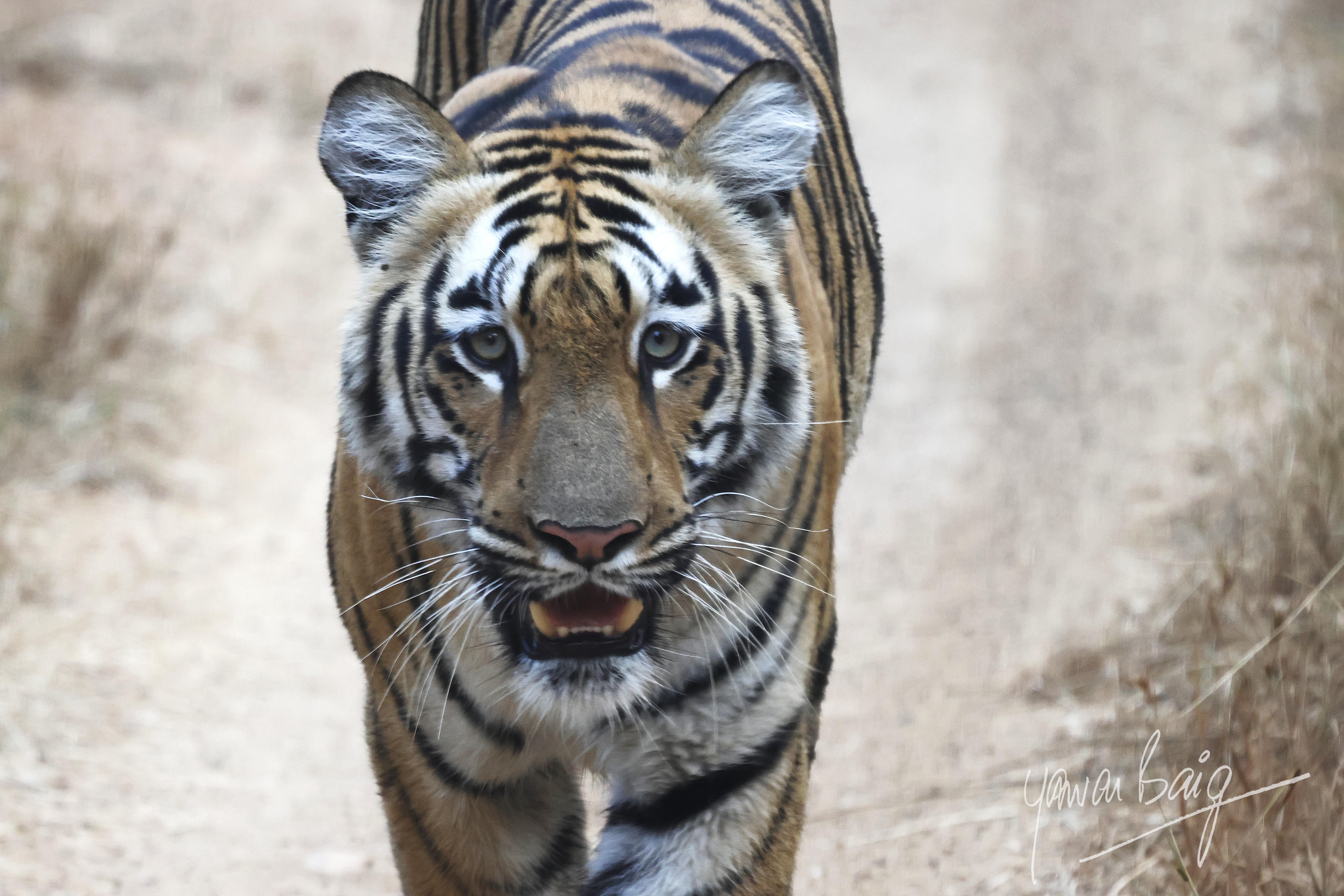
William Blake certainly never saw a tiger in the wild, as he never left England. On the other hand, I have seen tigers in the wild many times and can tell you that what Blake wrote is the truth. The tiger is a supernatural creature. I don’t mean that in the usual sense of the term. But if you experience a tiger – incidentally ‘seeing’ a tiger is not a sighting as it is commonly and wrongfully called, but an experience you feel deep in the pit of your belly – you will know what I mean. The story goes like this.
Last weekend I went to Tadoba and Umred in Maharashtra. The road from Hyderabad to Tadoba is an excellent four lane highway. I am in the pleasant doze I always fall into when being driven by my dear friend Saad Jameel Khan, an excellent driver on the smooth surface of the road, until we hit a small trench – a leftover from some afterthought cable laying – and I was rudely awakened as my head hit the car’s ceiling. Then I go back to sleep until the next trench. Mercifully that happened only twice. The road, as I mentioned, is excellent by any standard, but people driving on it have no idea how to drive on such a road. For example, I suddenly saw someone coming in the opposite direction on a divided highway. Before I could react, he flashed past. My friend only grunted, as if to say, ‘Uh! Another one.’ I can imagine the chaos this would have caused in the US, if someone did this on the I-91, the equivalent of the road that we were driving on.
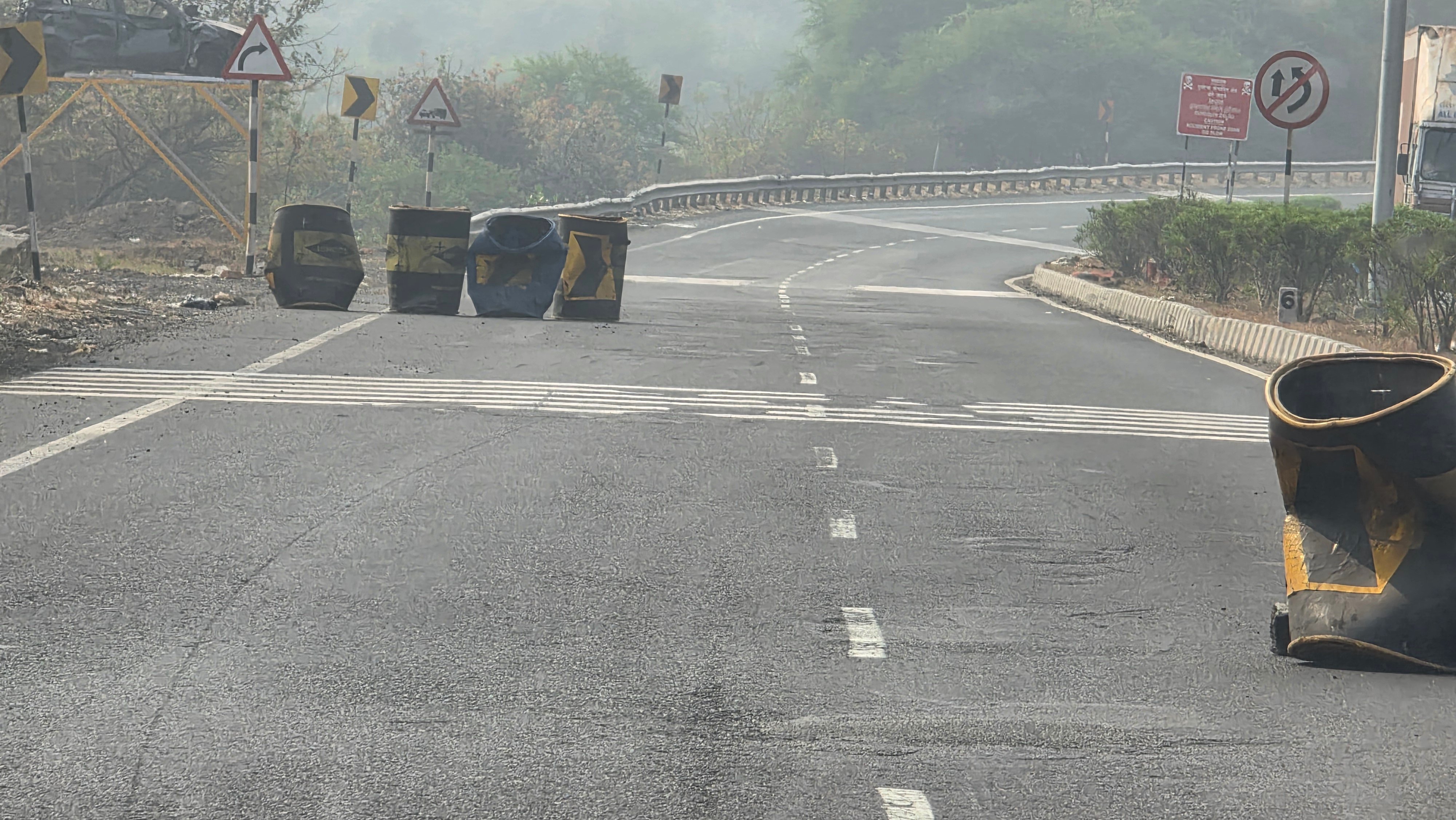
Then there are our truckers, in under-powered trucks loaded to twice their load carrying capacity, literally crawling at a walking pace up the slightest gradient. Just to make matters interesting – as in the Chinese curse, ‘May you have an interesting life’ – they drive in both lanes parallel to each other exchanging pleasantries, while wildly hooting traffic is piled up behind them. Another unique experience which is guaranteed to stop your heart is while driving at 160 km/hr on a dark night, meeting several retired diesel drums holding hands and dancing in the street. You may well ask how they got there in the first place. The answer is, ‘They were brought there by the police to create a roadblock to check for currency in driver’s pockets and left there to save themselves the trouble of having to repeat the exercise the following month.’ As they say, ‘India is not for beginners.’ That begins with our roads. But at least the road is good, so it cut down our travel time.
We reached Svasara Resort from where, after a cup of coffee and fried onion pakodas delicious and guaranteed to give you heartburn, we boarded a brand new Toyota Innova to go to Umred a drive of little over an hour. That road, as straight as a strand of spaghetti without bolognaise sauce, winding through village after village. In each village to protect children who play in the street, there are speed breakers every twenty feet. I will leave you to imagine how that ride feels. The solution would be to draw a straight line from point to point for the main road with branch roads going off into each village on the way. That way only people going to that village would do so. All others would be able to proceed along the main road, unhindered by speed breakers. A very distressing sight we saw was the number of women at dawn and dusk, with a small bottle of water to wash after the job is done, squatting by the roadside, doing what can only be done squatting. Every time they see the lights of a car, they quickly stand up to protect their modesty, their folded sarees unfolding to their knees. What all this does to their hygiene is not difficult to imagine. What I fail to understand is why the village authorities don’t build public toilets especially for women. The villages are all prosperous enough to afford this but there is not one in any village. Of course, seeing men urinating and defecating in public is no rare sight in India, but I can’t look at that without embarrassment. You get to see enough of those as well. But seeing women exposed to such humiliation so unnecessarily, is very painful.
We reached the Karhadala gate only to discover that they have a new rule that one is not allowed to take mobile phones into the park. The reasons for this are, well, reasonable. But that meant that my friends who didn’t have DSLR or other cameras couldn’t take pictures. Mobile phone cameras have developed so much that they have all but made sophisticated cameras unnecessary for all but professional photographers. They are also very versatile in enabling one to take video recordings of action in all kinds of light. Losing access to them is not easy. But we had no choice, so our phones were placed into a very cute metal box which is lined with felt and locked.
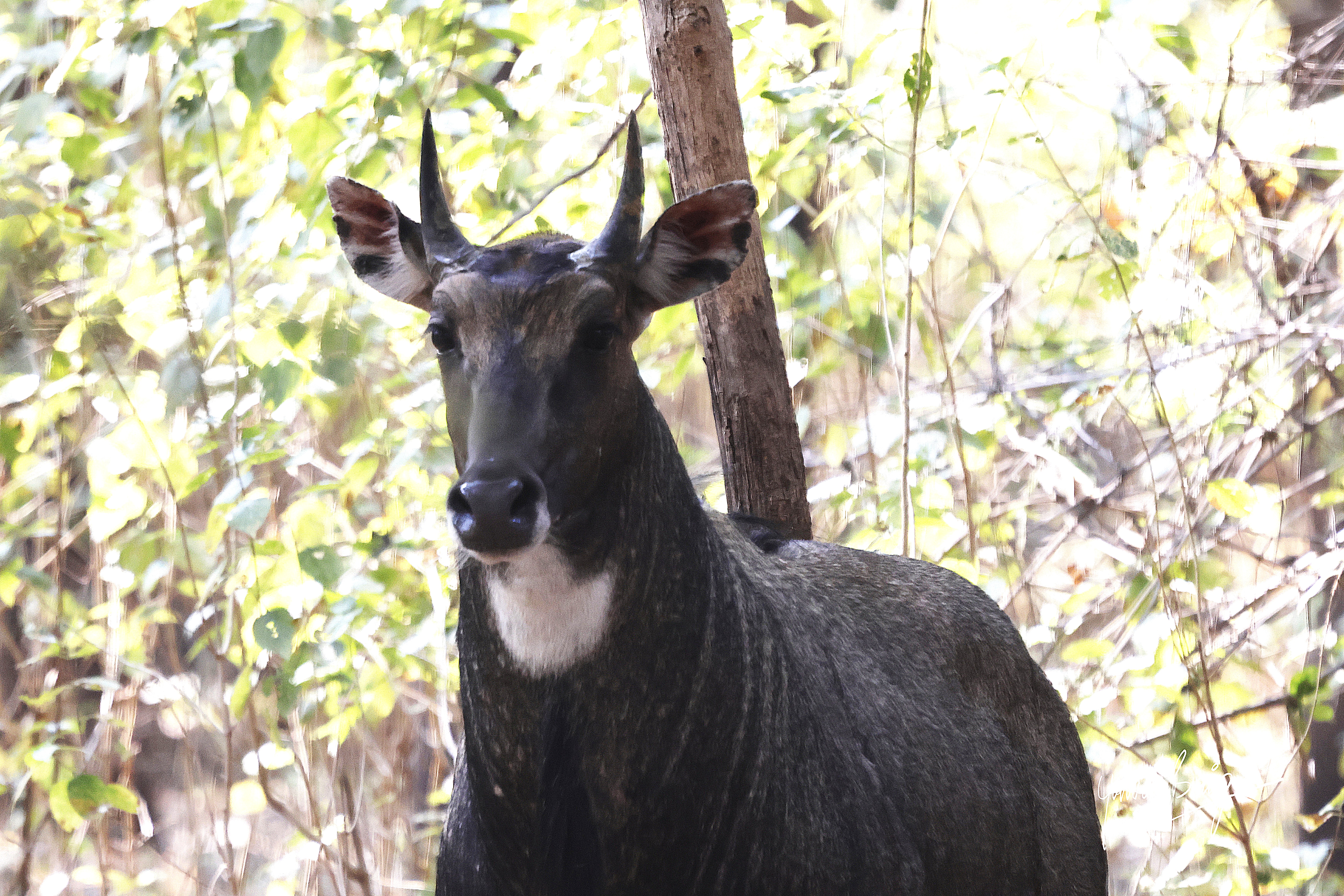
Then we proceeded into the park. Umred and for that matter Tadoba, has lateritic soil. The result of Gypsy vehicles racing up and down its roads is that the roads have a layer of very fine powdery red dust that rises in a huge cloud, which follows you like a nemesis. As you brake, it races up and lovingly envelopes you completely so that for a few seconds you become invisible to everyone but your conscience. Then when the dust settled, we saw a beautiful Blue Bull (Nilgai) male, the largest Asian antelope, looking at us curiously. Males (bulls) have a blue-grey coat, while females are brown. Males also feature a white patch on the throat, a short mane, and short horns. The Blue Bull’s eyes with their long eyelashes would do credit to a Hollywood actress. It has a fine head, powerful withers sloping down to massive hindquarters, witness to the power it can call to bear when it needs to make a quick exit.
Our driver continued to race along hunting for the elusive tiger, quite impervious to my pleas that I wanted to see and photograph birds also. These parks have a profusion of Blue Bull (Boselaphus tragocamelus), Chital (Spotted deer – Axis Axis), and Sambar (Rusa unicolor), which the guide and driver insist on calling Sambar ‘deer’. Given that the only other Sambar known to mankind comes in a small bowl as an accompaniment to Idlis and Wadas, it is hardly necessary to specify that the Sambar that you are seeing in the forest is not curry but a deer. Sambar shed their antlers primarily in March and April, while Chital shed theirs between March and July. That is how we were able to see two magnificent Sambar and Chital stags with their racks intact. Sambar are the largest deer in India. Only males have antlers that typically feature three tines (points) on each beam.
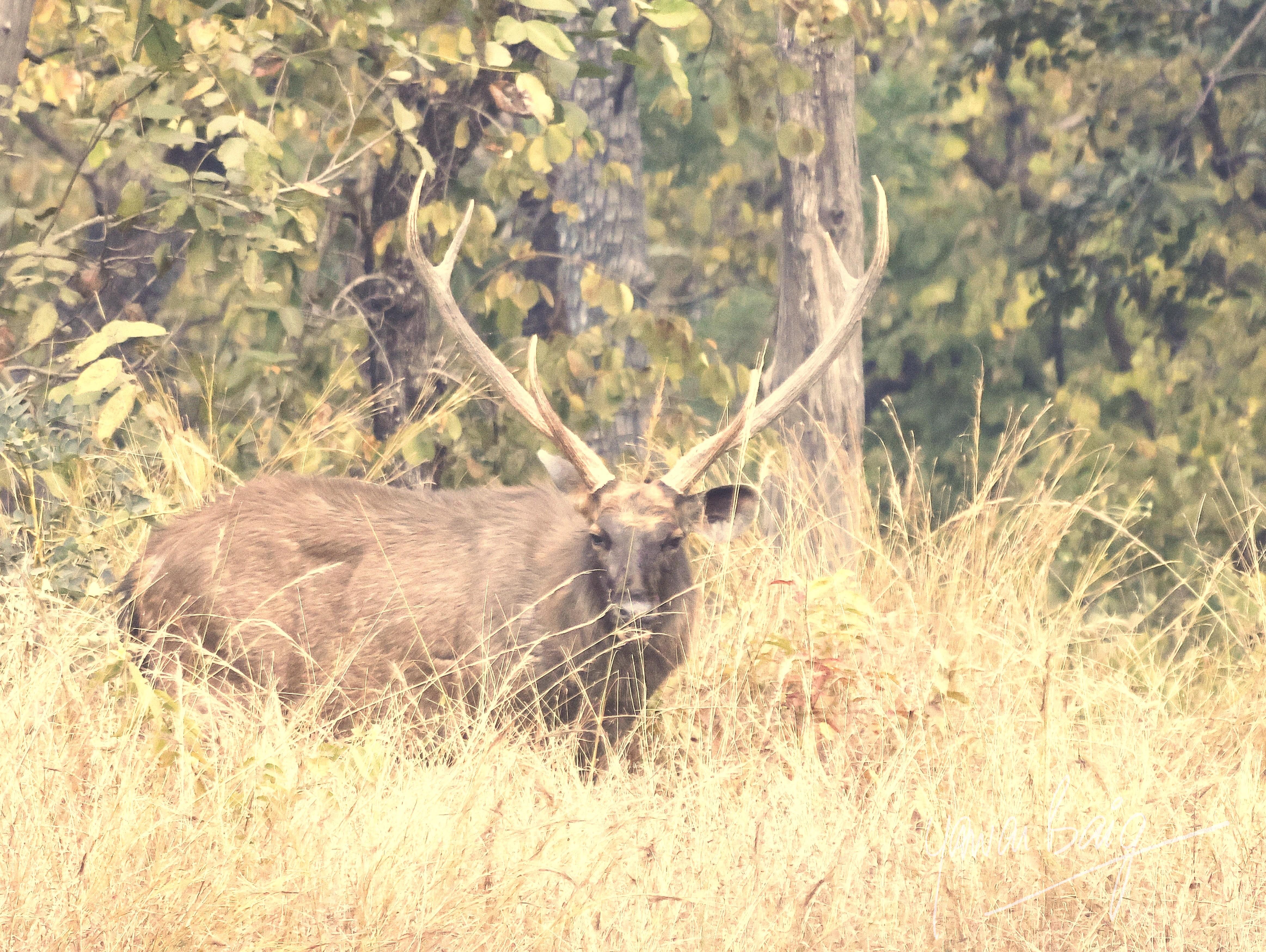
Sambar antlers are large, rugged, and can reach lengths of up to 110 cm (43 inches). The record for Sambar antlers in India is an animal that was shot in Bhopal which had antlers with a main beam of 50.5 inches. Incidentally, this is why I am against trophy hunting where the best of the species gets killed, for no reason other than that it is so magnificent. This takes the best genes out of the breeding pool, reducing the quality of the species over time. We have seen this happen with animal after animal, all victims to mankind’s insatiable egos. Another record mentions a cast antler from the Khandesh district measuring 52 inches, on the main beam. Chital antlers are slender and also three pointed and sweep backwards over the shoulders and curve upwards. The record for Chital antlers is 41 inches. Chital are among the most beautiful deer in the world and have been exported all over the world and you can see them in parks in America and Europe and elsewhere.
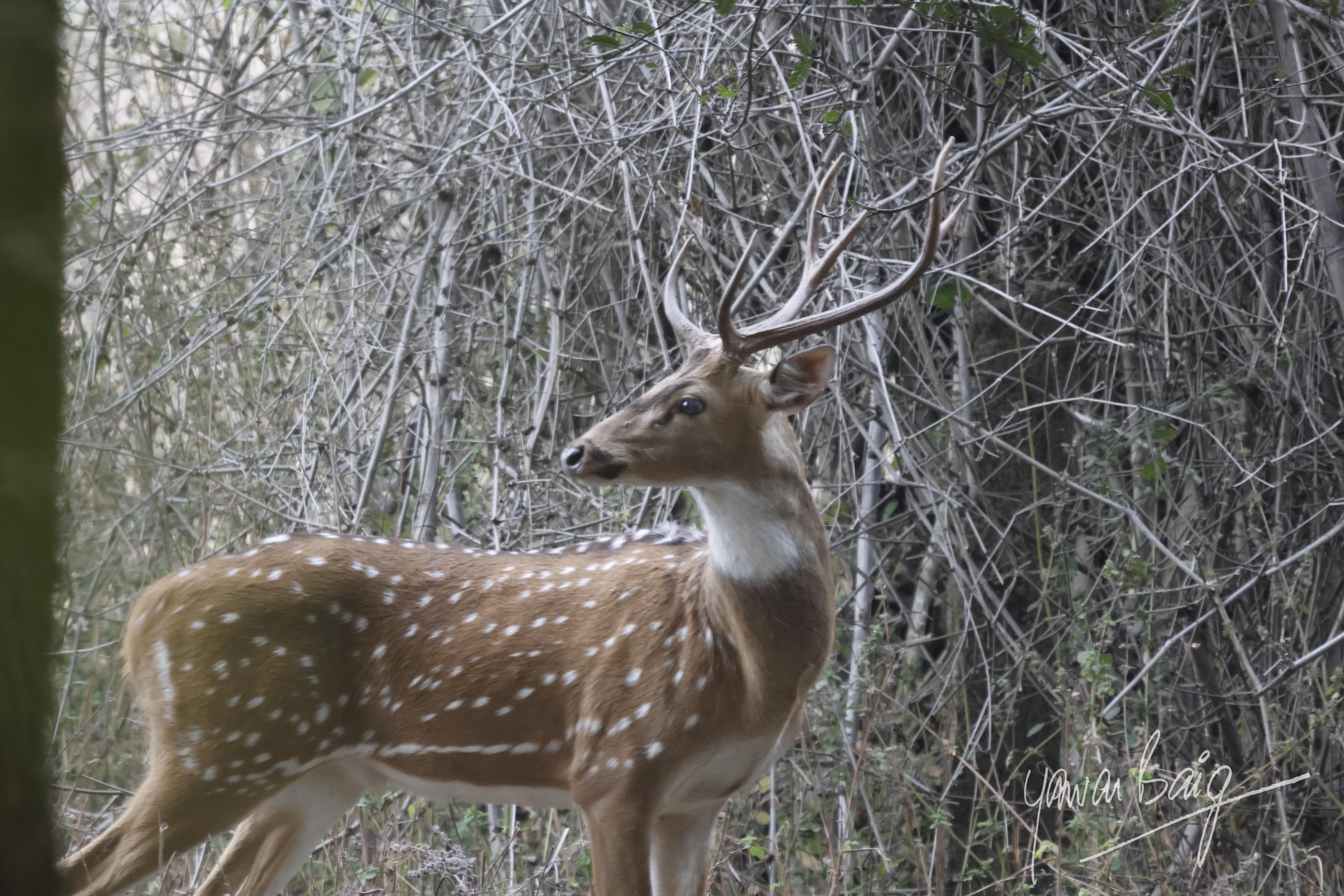
Both Sambar and Chital are on the menu for tigers and leopards and are well aware of this status and so are very skittish in forests where there are tigers and leopards. That makes them the most reliable informers about the movements of these two apex predators. Especially Sambar because Chital sometimes tend to get too high-strung and nervous and will sound their high-pitched bark even at shadows. But Sambar will not call until they can see the tiger or leopard and so their deep ‘belling’, is a totally reliable signal that the tiger is on the move and has been seen. The jungle talks to those who understand its language. The Langur sentinel from his perch on the highest tree, calls first, then Chital and finally Sambar and we head in that direction.
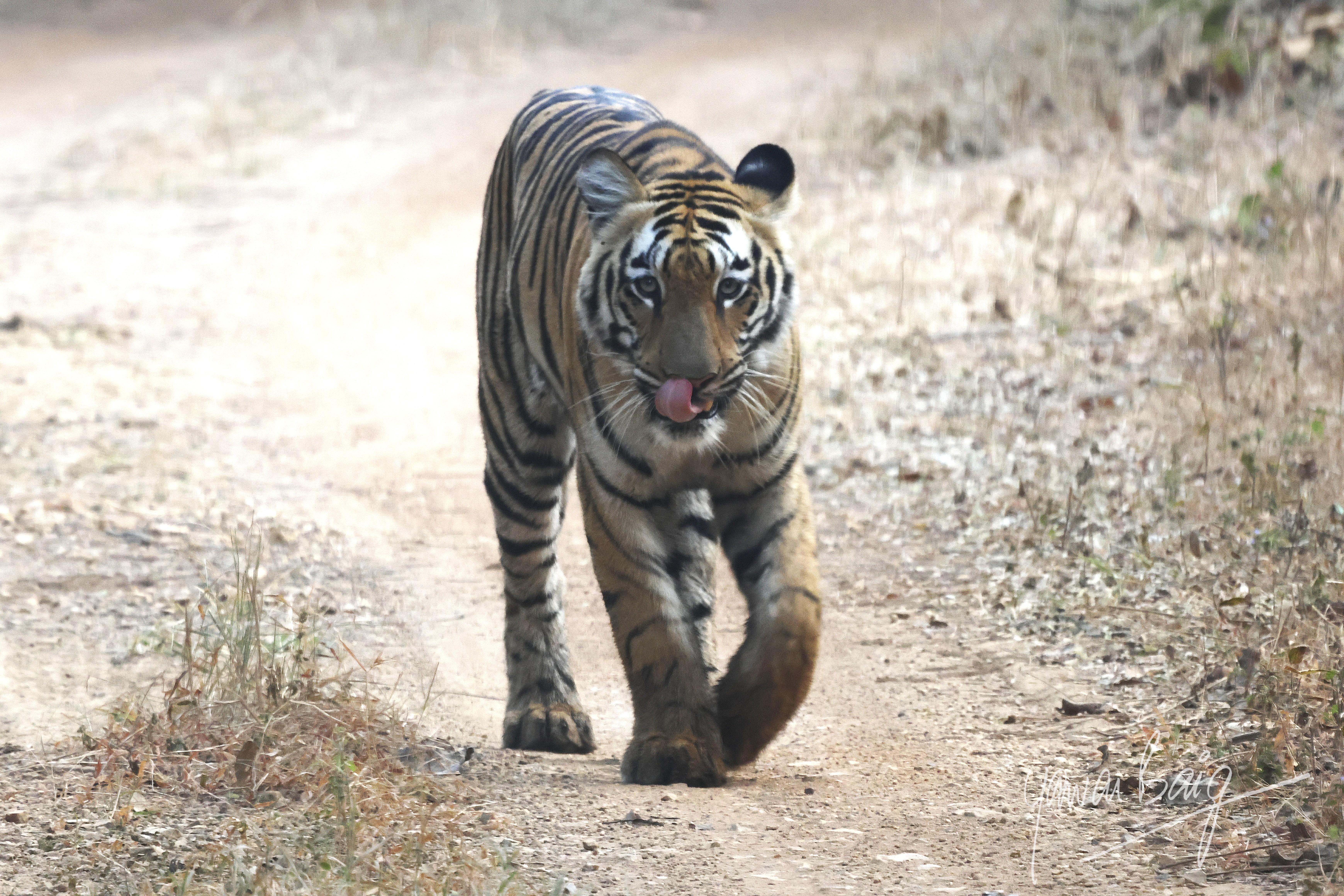
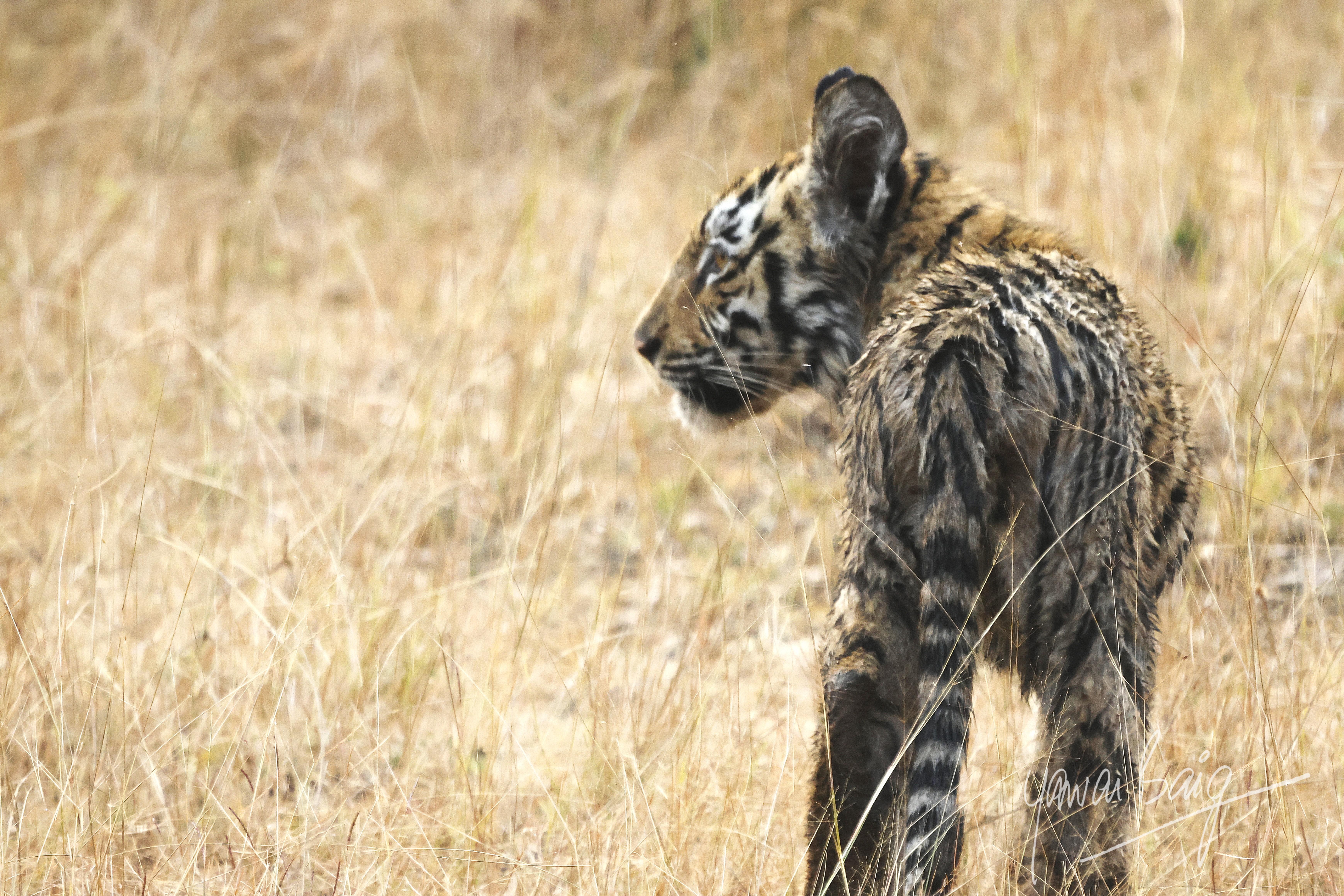
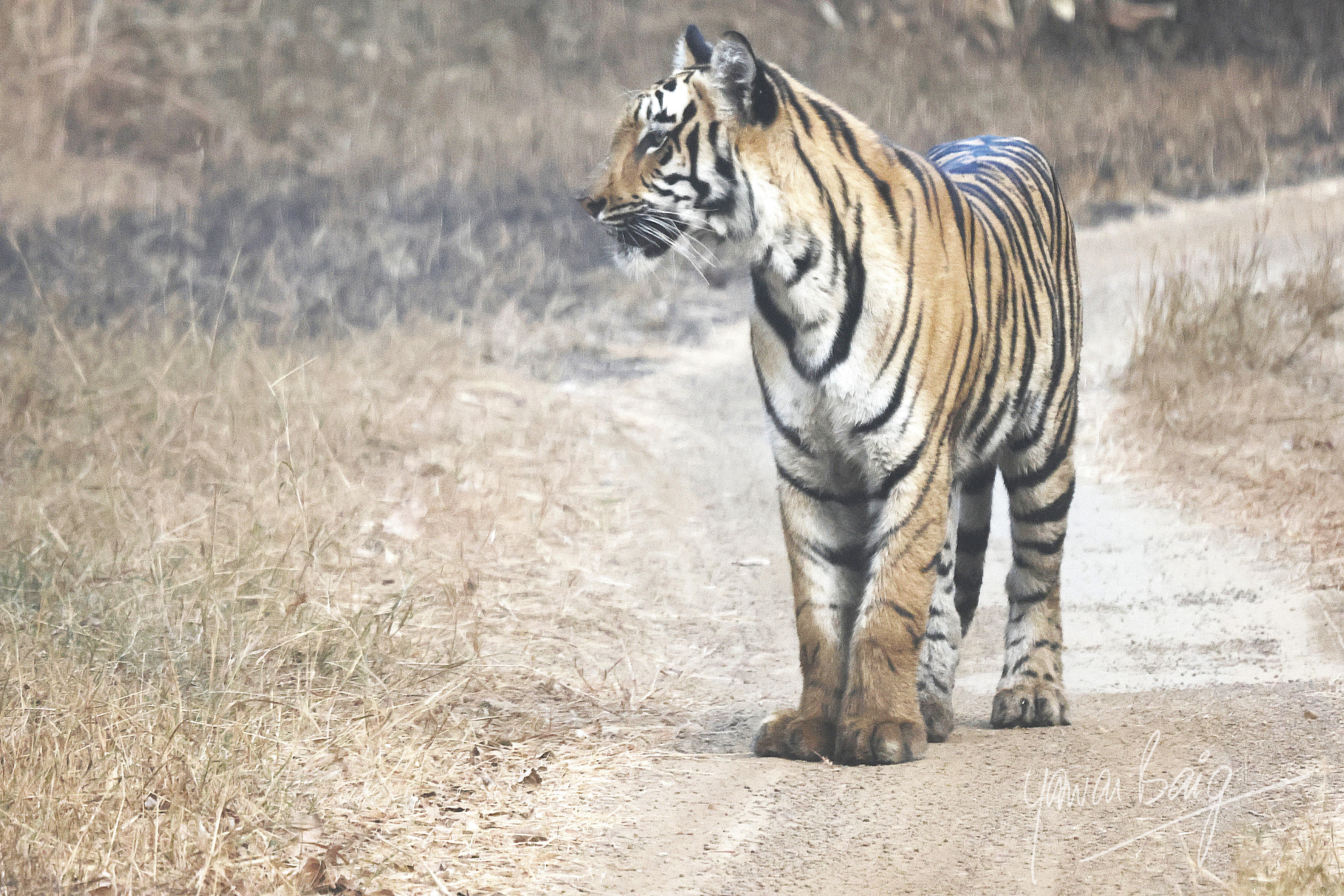
As we round a bend, we see, off to the right, a tiger on a low tree. He climbed up there for reasons he refused to disclose, but when he heard our Gypsy he jumped down and started for the road. It was a two-year-old male cub who, our guide informed us, had got separated from his mother and two other siblings. Not too alarming a situation but one which he needs to correct soon. Tiger cubs are totally dependent on their mother for protection from other tigers, leopards, hyenas, wolves and almost anything else, all of whom firmly believe that the only good tiger is a dead tiger. And that the best thing about a cub is how easy it is to kill.
Full grown Bengal tigers stand 3.5 feet at the shoulder, measure 10 – 11 feet from the tip of the nose to the tip of the tail and weigh between 180 – 260 kilograms of liquid steel otherwise called muscle. Some big specimens can go up to 300 kilograms. Not easy to kill, to say the least.
But cubs are vulnerable and need constant protection. Tiger cubs also need their mother to teach them everything to do with jungle lore and how to hunt. For up to and sometimes more than two years, they can’t hunt for themselves and their mother hunts and brings the kill to them or calls them to the kill depending on how big they are. That is another reason why hunting tigers is such an evil thing, because if you shoot the mother and she has cubs, you have effectively wiped out the entire family.
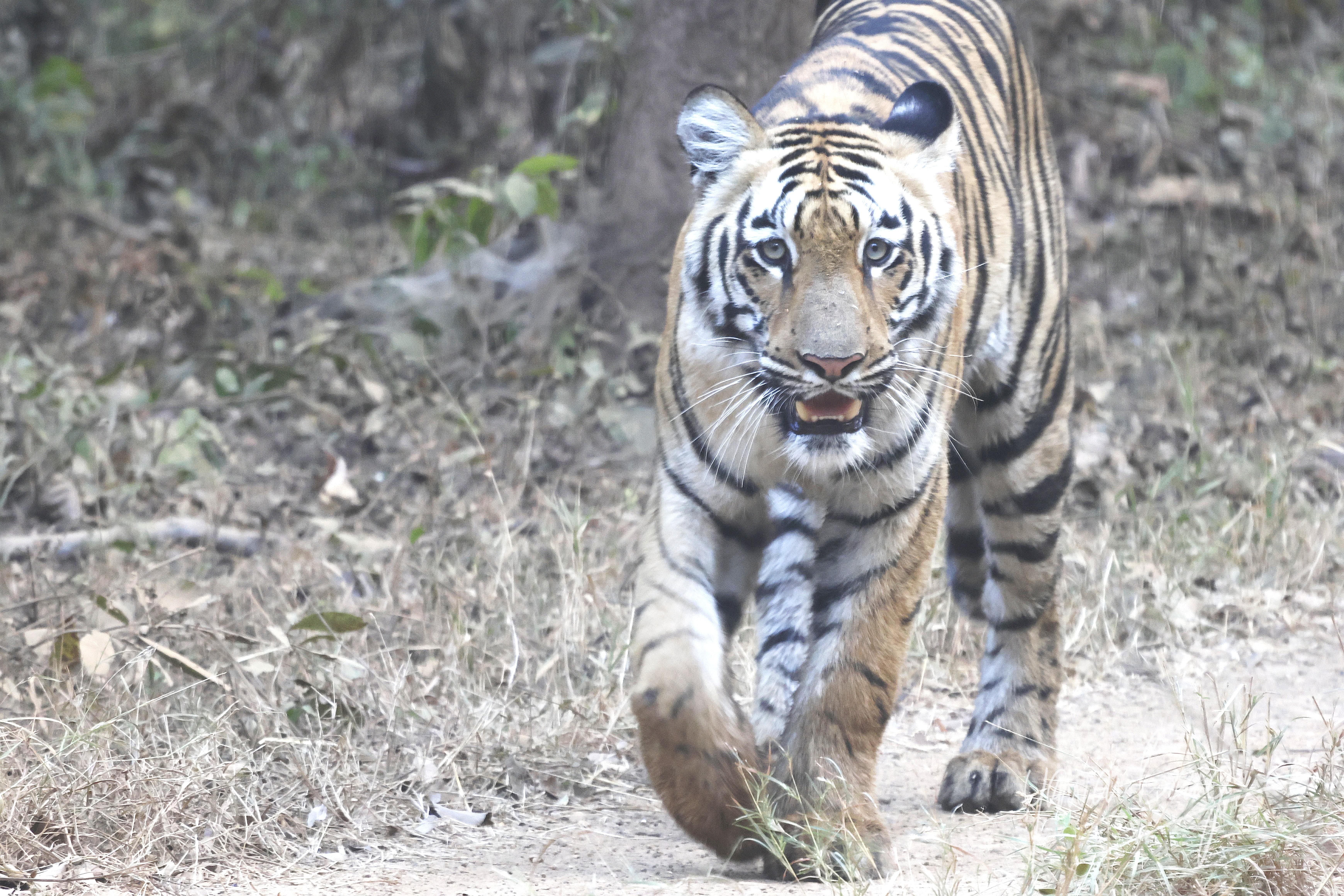
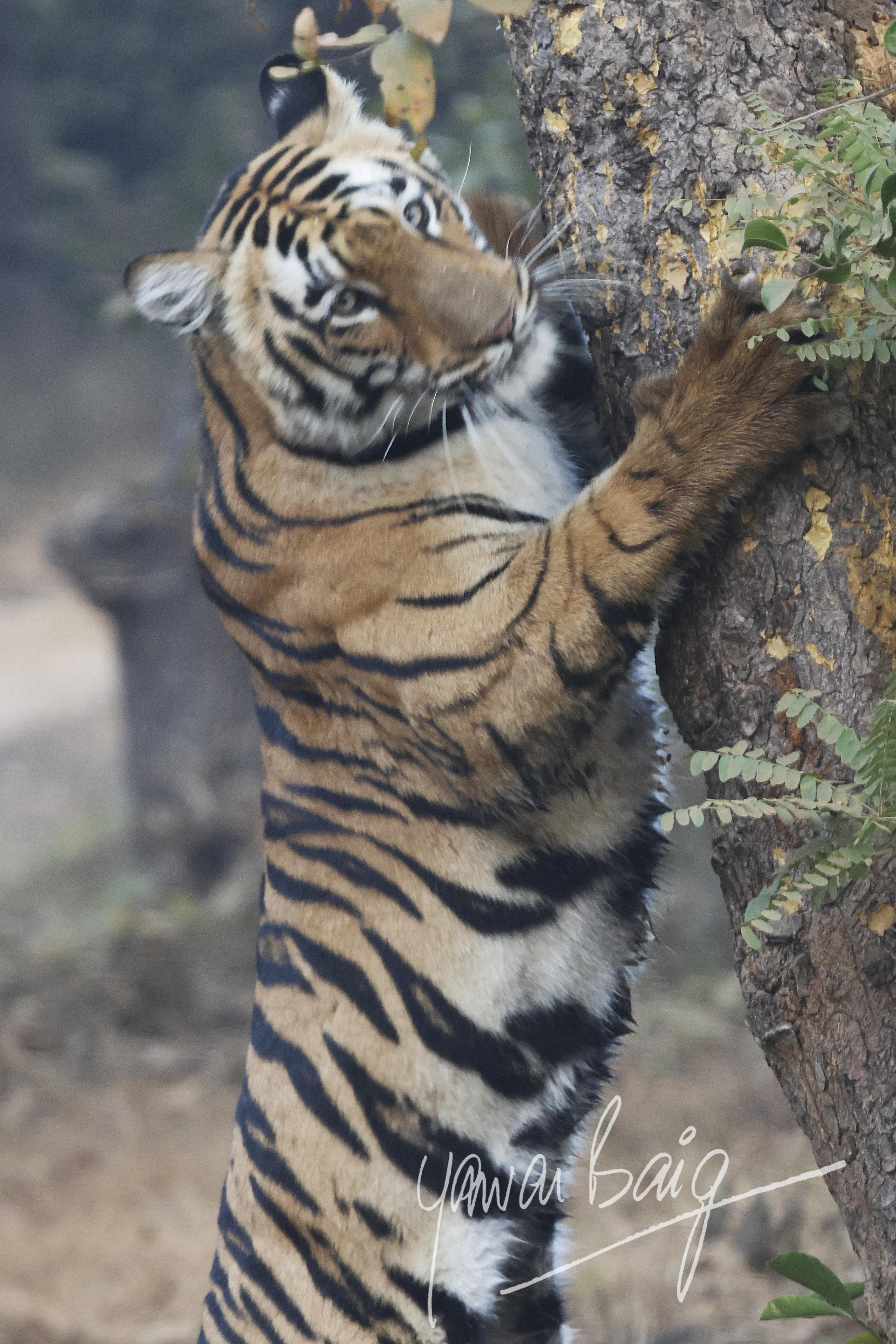
We moved forward slowly to keep the dust down. The cub came into the road and walked along it, following us. If we waited too long and he got close, he would veer off into the undergrowth by the roadside. We would hurry forward, and he would come back into the road. The problem with moving and stopping was the dust, which was so heavy that every time we stopped, I couldn’t see the tiger thanks to the cloud of red dust that would cover him and us. We had several minutes of this follow the leader game when the tiger came to a signal tree. There he reared up on his hind legs and hugged the tree, smelled the calling cards of other tigers who had been in the area, rubbed his face against the bark of the tree to leave his scent and then scored it with his razor-sharp claws. Mature tigers also spray urine on signal trees to mark their territory and demonstrate dominance.
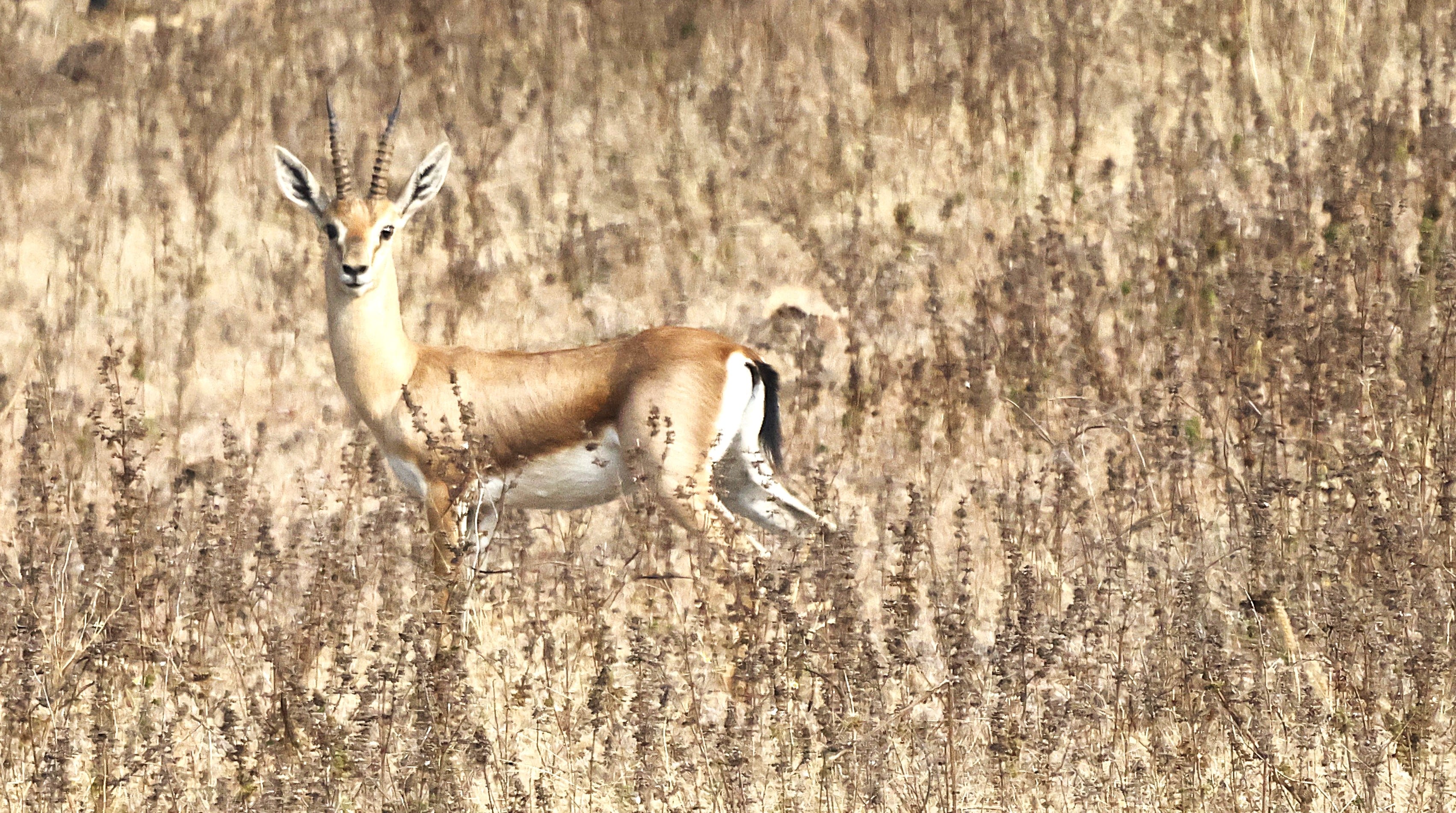
Eventually the tiger wandered off into the jungle. We proceeded onwards and took a long detour along the boundary of the fields belonging to a village adjacent to the park. In that open area to my great delight, I spotted a Chinkara (Gazella bennettii), the Indian gazelle. It is a small, graceful antelope native to South Asia's arid plains, deserts, and dry forests, known for its speed, shy nature, and ability to survive without much water. It has a reddish-buff coat, distinctive black and white facial stripes, and lives alone or in very small family groups. I was thrilled to see the Chinkara which is so shy and elusive that it is a very difficult animal to spot.
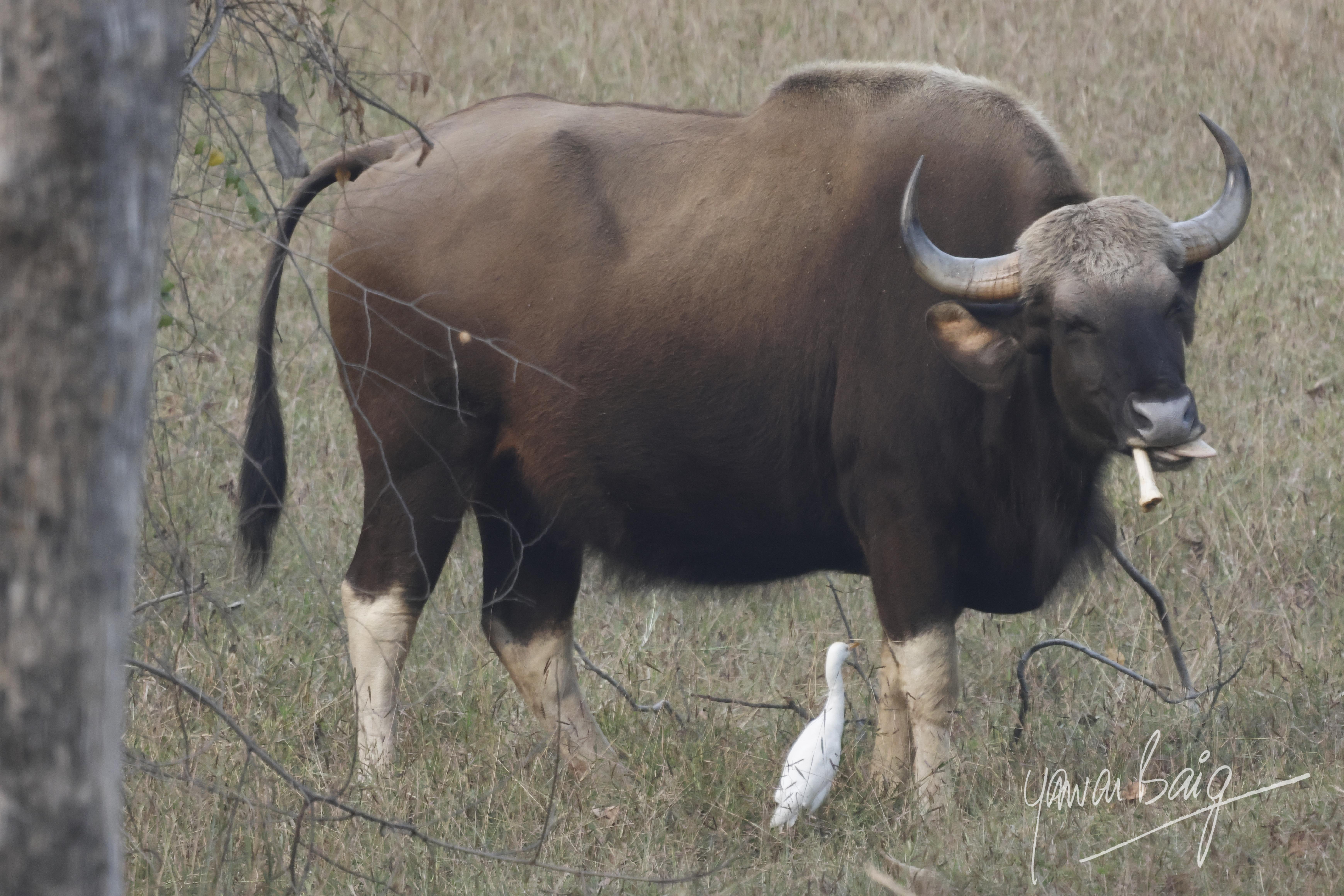
We came upon a small family herd of Gaur (Indian bison – Bos gaurus), grazing in a forest clearing. One of the big cows was chewing on a Chital bone, remnants of a tiger kill. They do this when they feel the need for a calcium supplement.
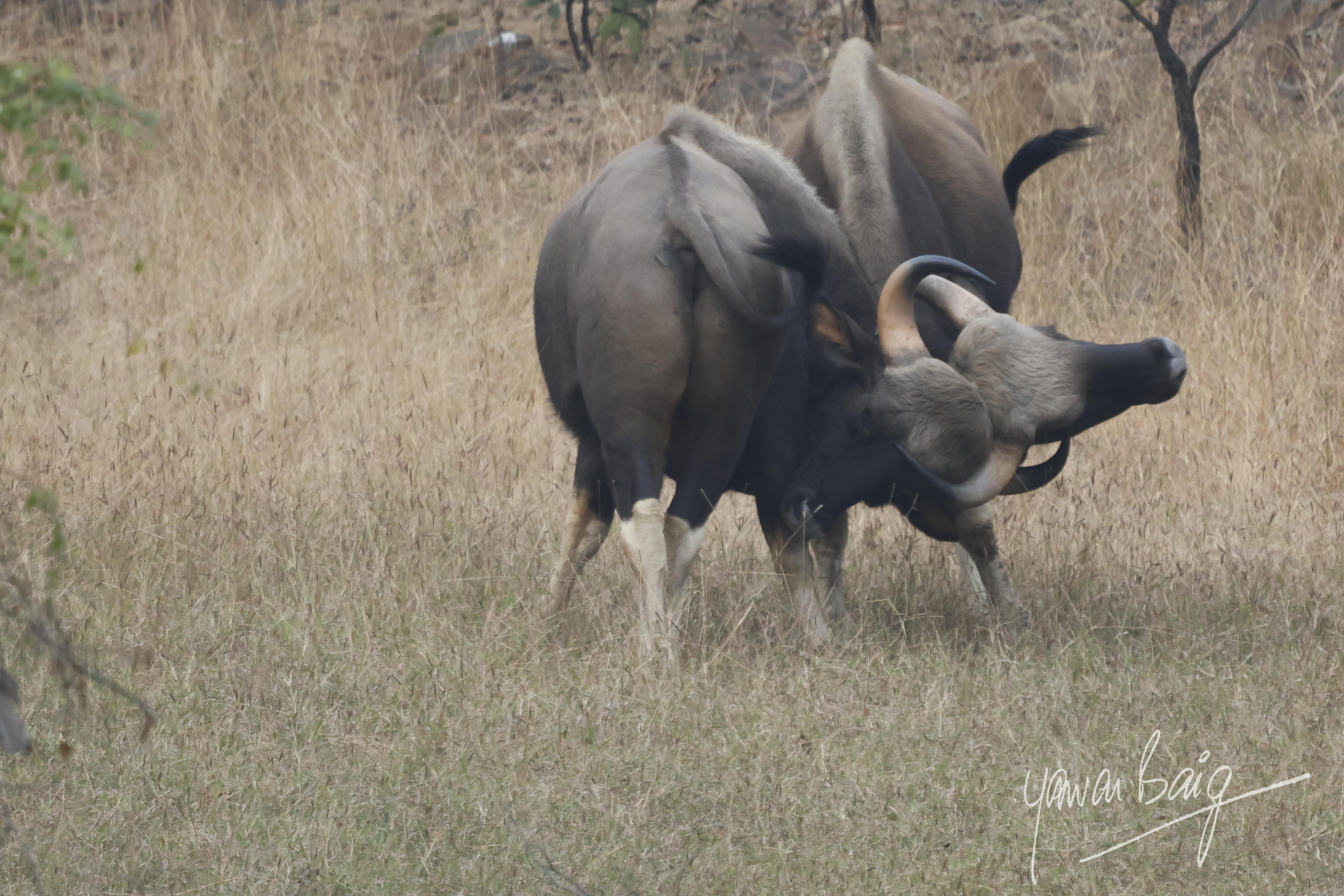
Two young bulls were sparring, not a serious fight, but the needle-sharp points of the horns can still do damage.
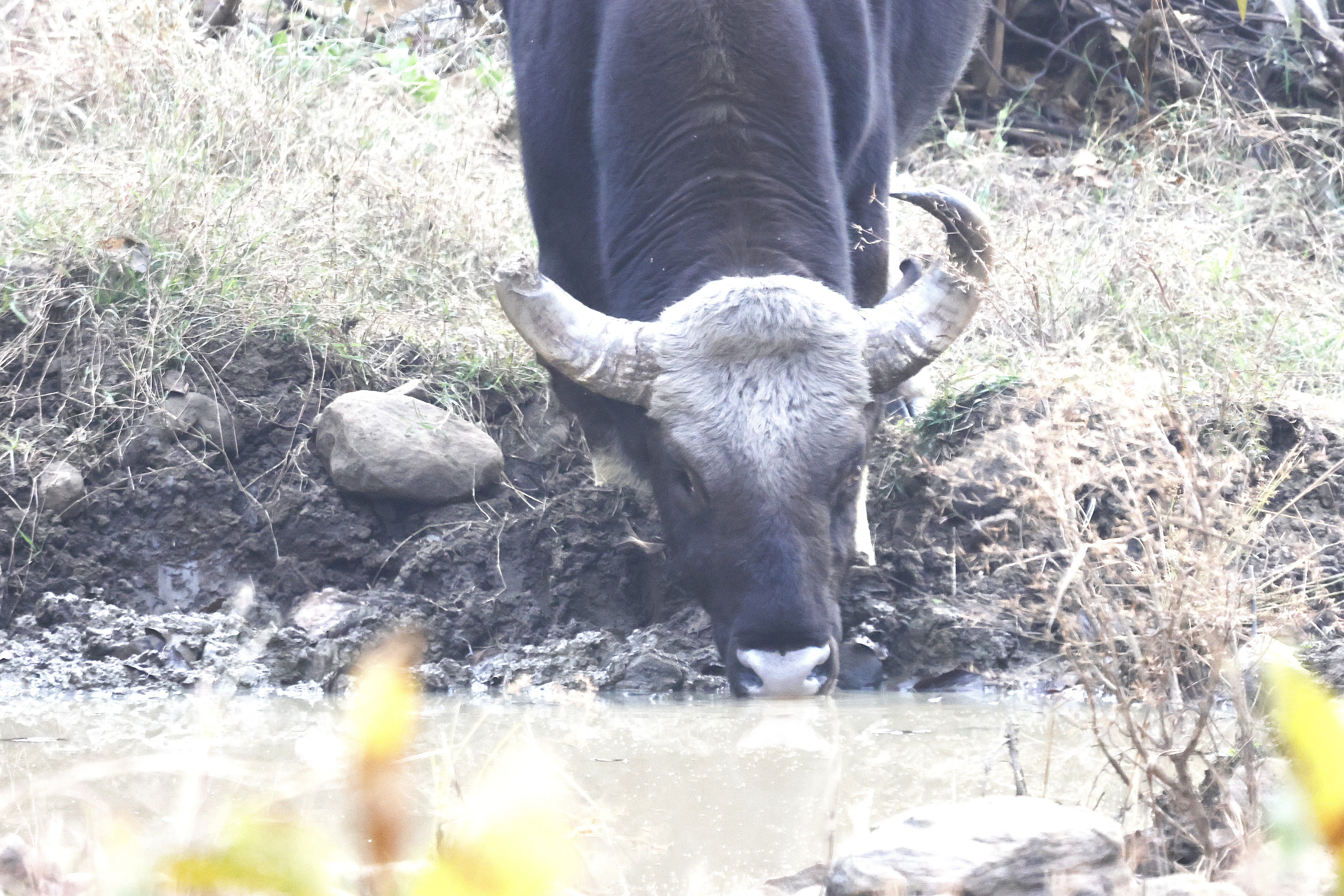
At a small water seepage, along came an old bull. A veteran warrior with one horn tip broken off and blind in the right eye. As he lowered his head to drink he was joined by a Blue Bull male and they drank in companionable silence.
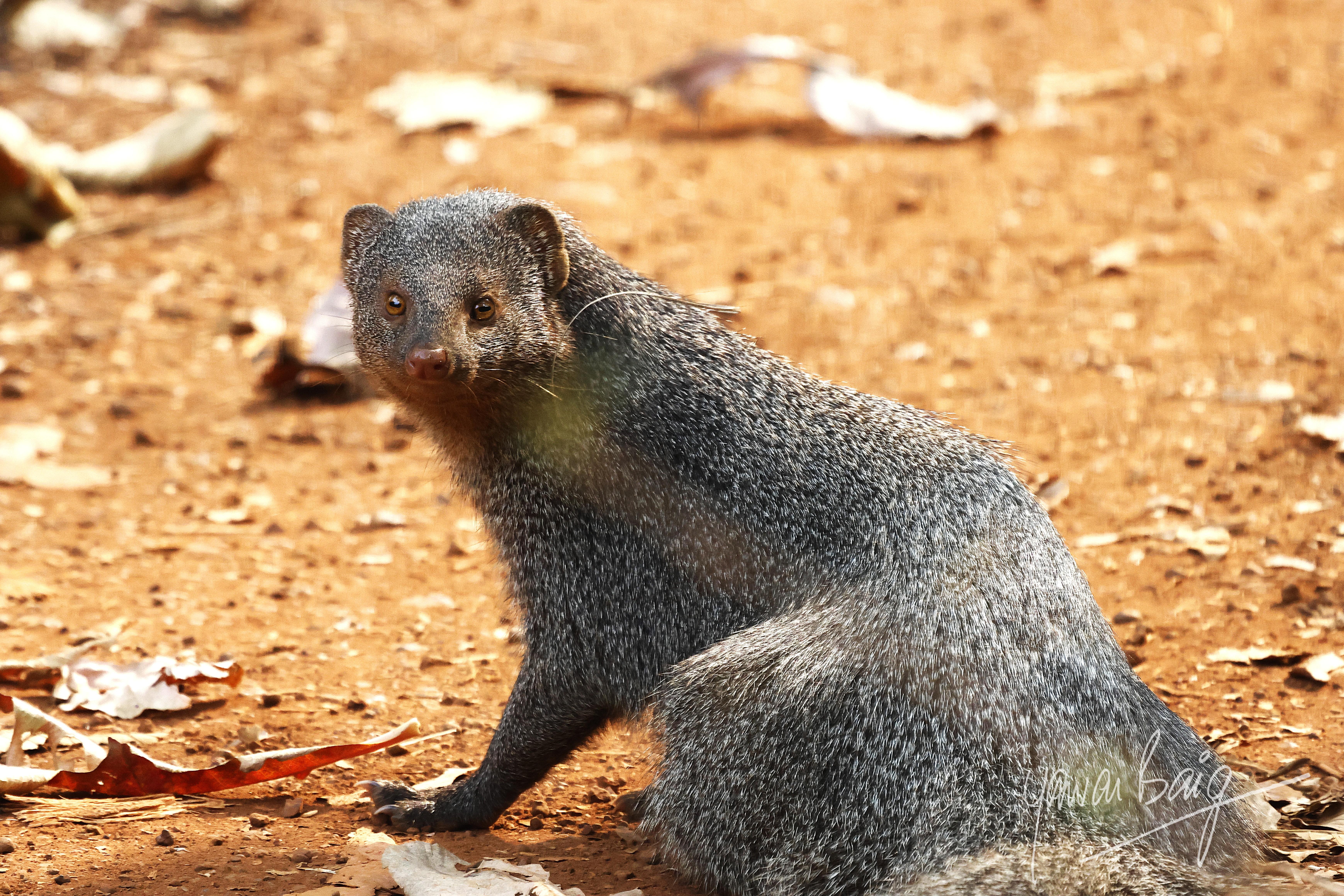
A Grey Mongoose, one of a pair, watched us in open curiosity, torn between his need to discover who we were and following his mate who decided to leave him behind and disappeared in the bush.
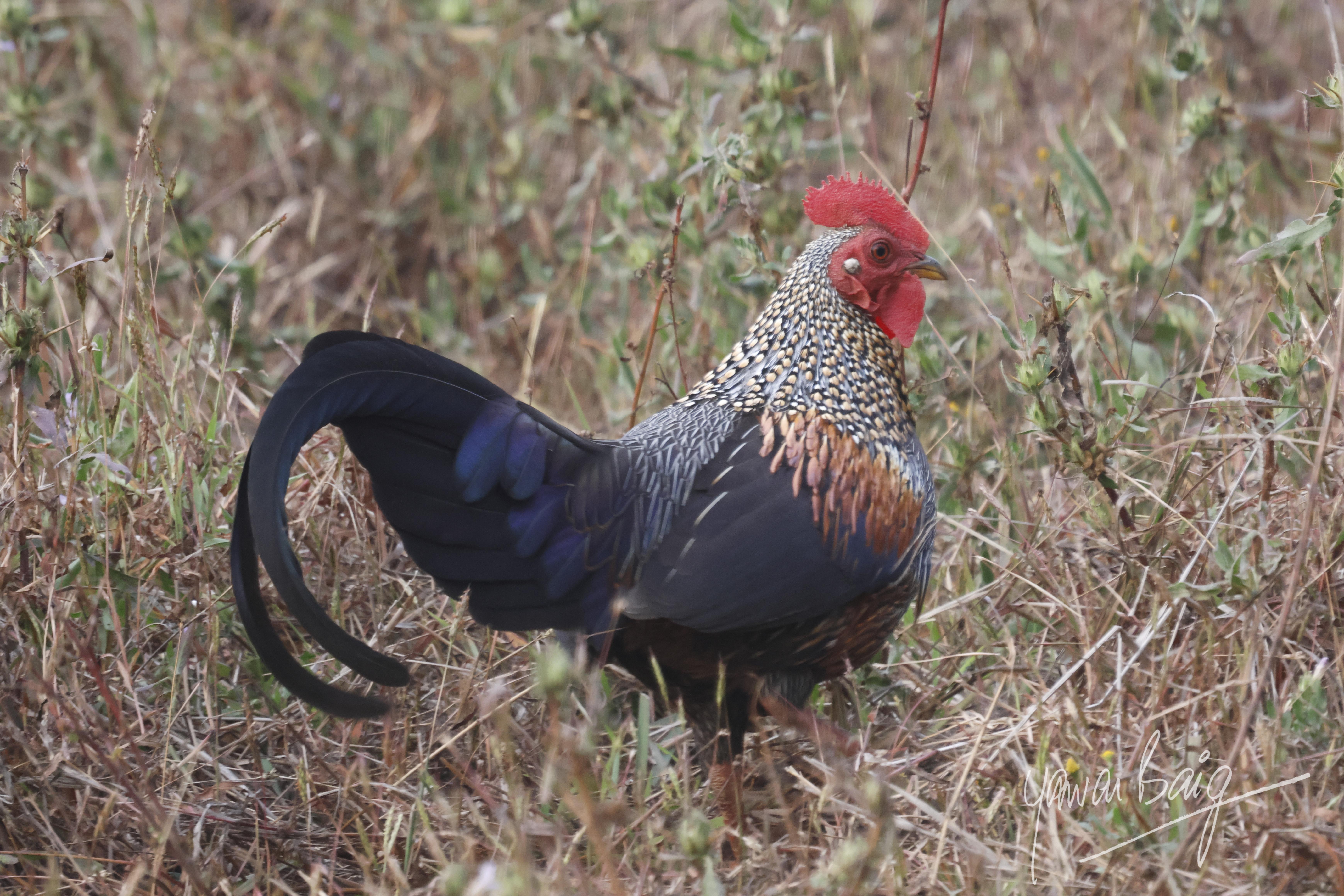
As the day drew to a close, we came upon another clearing literally teaming with Grey Jungle Fowl roosters. Just one or two hens, but some marvelous, flamboyant roosters. Eventually and reluctantly, we headed back to the gate, bodies pleasantly sore with being banged around in the Gypsies driven over atrocious roads by drivers who could easily win the Dakkar Rally and do their best to prove that to you every day.
I was returning to the Indian jungle after almost eight years of having been away in America and elsewhere. For me it was like coming home. The calls of the Red-vented Bulbul, the Crow Pheasent, the Rufus Treepie, the Did-you-do-it of the Red-wattled Lapwing, the Kok-kow-Kow-Kok of the Grey Jungle fowl and the scream of the Peacock signaling the coming of nightfall, were all music to my ears. Music long unheard and yearned for.
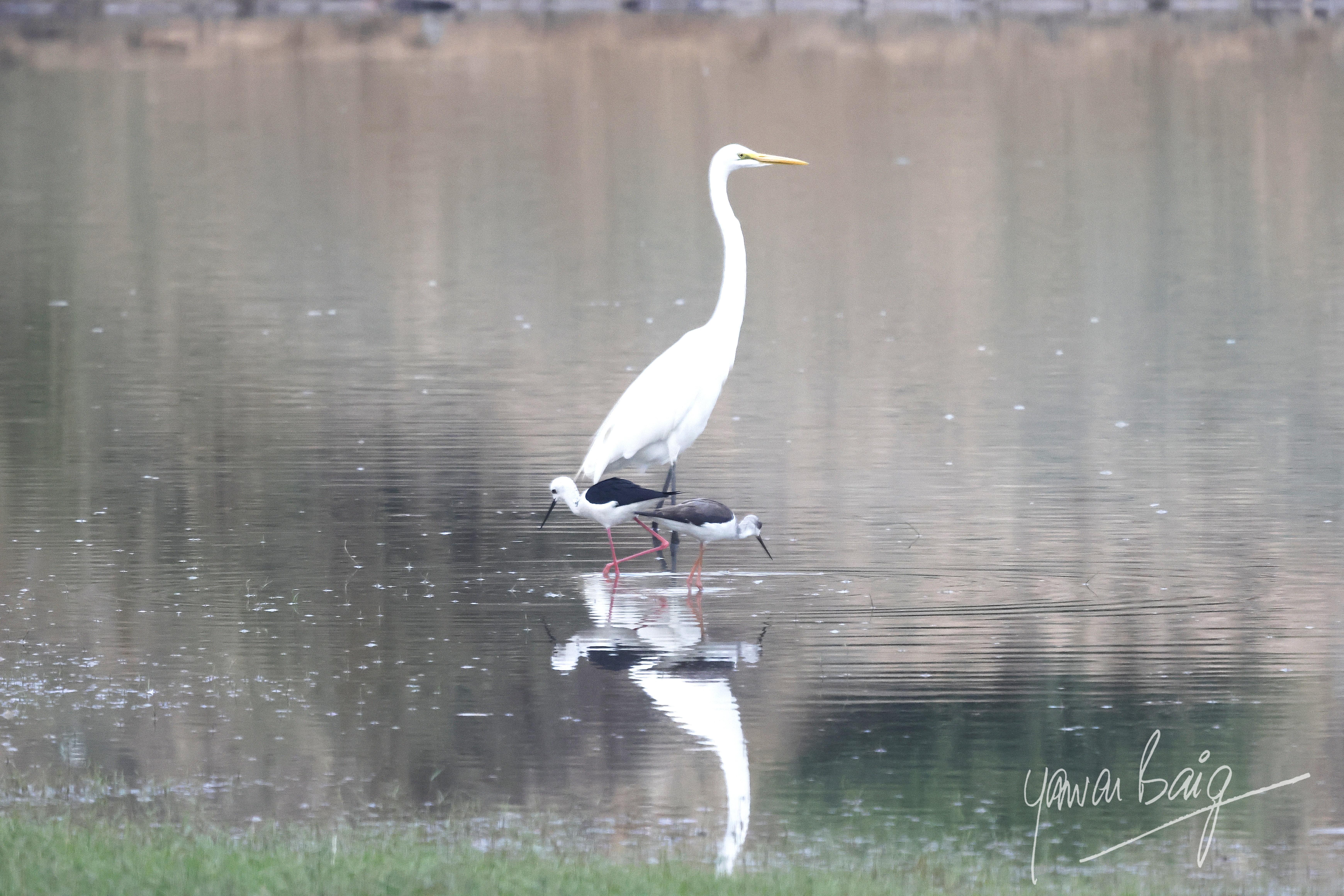
We stopped for tea beside a lake and I spotted a Great Egret, Black-winged Stilts, Little Egret, Common Kingfisher and Pied Kingfisher and an Asian Open-billed Stork, standing off to one side, refusing to socialize with common folk.
Later in the night, after a very welcome shower to wash off half the earth that was sticking to me, as I sat outside my room at the resort, I heard the hoot of Spotted Owlets, the call of the Nightjar which sits in the middle of pathways lying in wait for flying insects. He comes off his perch on the ground like a rocket of doom for the insect, catching it in mid-flight and comes back to his seat on the ground. Finally, as I was about to retire, I heard the bark of the Chital, signaling that the tiger was on the move. His day begins when mine ends.
Comments (0)
Please log in or sign up to leave a comment
Loading comments...