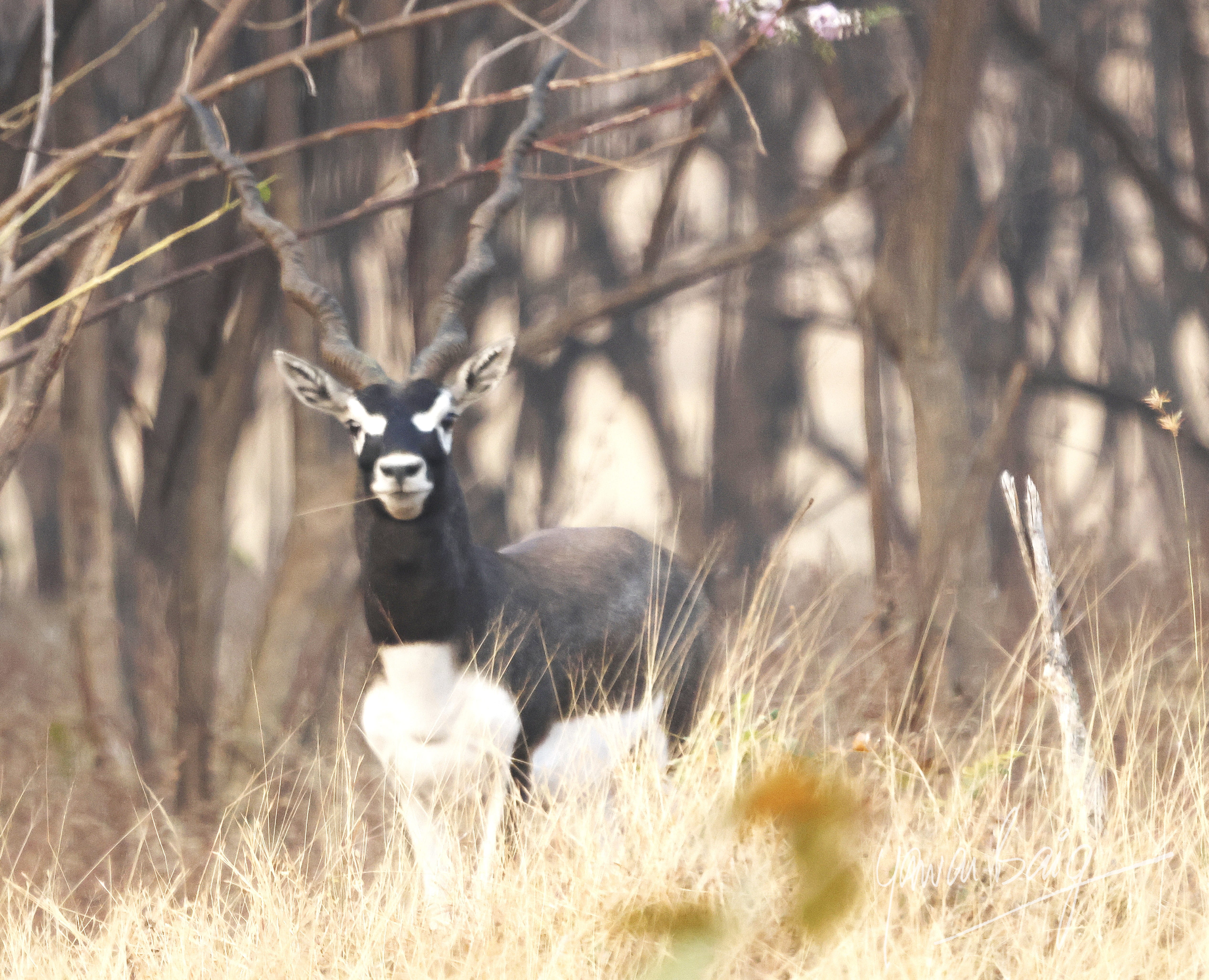
We spent two nights at the Karnataka Jungle Lodges & Resorts, Blackbuck Resort in Bidar. Lovely cottages, set in natural forest, on the bank of a lake. Very peaceful and quiet with only birdsong to keep you entertained. Lots of birds, both migratory and resident. And all vying to out-sing each other. The best part of the resort is the people. Wonderful people, friendly, courteous, helpful, very knowledgeable, and willing to do anything to ensure that you have a memorable holiday.
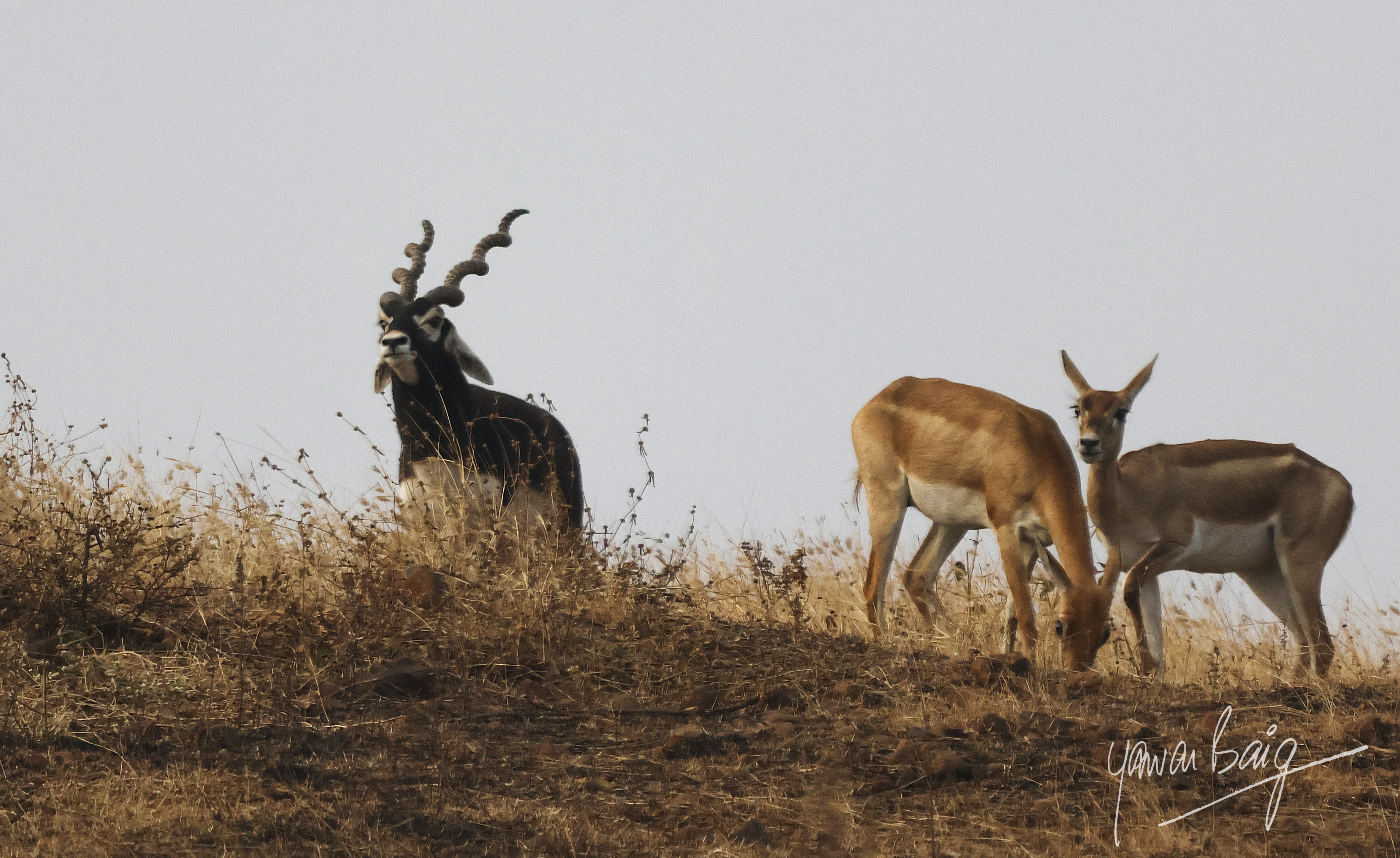
The big buck stood tall on the peak of the ridge, puffing out his muscular chest, his spiraled horns rising high above in a perfect V, their points, making them lethal weapons. His black head with striking white face markings circling the eyes, like eye-patches, his chest with is distinctive white breastplate, and the white belly and legs, all marks of a warrior, surveying his realm. His realm is the grassland that covers the ridge and flows down like a blanket to the lake on one side. On the other, it ends abruptly at the barbed wire fence along the highway that slashes through it. On the banks of the lake are farms of the villagers, growing tomatoes, peas, millet, and sometimes rice. All good to eat as far as the blackbuck are concerned but the villagers are clearly not cooperative. So, there are barbed wire fences draped sporadically with old sarees and other cloth that flap in the crisp breeze that comes off the lake. Young fawns get spooked by this movement, but the older does and bucks know that they are harmless and have learned to ignore them. Who can’t be ignored are the farmers themselves who spend the night on platforms constructed in the fields to guard them against the depredations of wild boar and langur. They are not antagonistic to blackbuck, but when you are guarding a field, you can’t let one species in and ask another for a permit. So, everyone must run the gauntlet. Imagine doing that even twice a week, because blackbuck don’t drink every day. The sanctuary itself is really very small for an animal that once roamed the wide grassy plains, fearing only the wolf and the leopard. Today there are two other things to fear. Both, which if left unaddressed will send the blackbuck reeling off the screen into oblivion.
One, curiously enough, is a tree with a beautiful pink flower, Gliricidia. This is a leguminous tree which is fast growing, drought resistant and grown both from cuttings and seeds, for cattle and goat fodder as well as living hedges. It spreads fast and needs no special care. Ideal tree to grow in barren lands. But lethal in grasslands where blackbuck live. Flowering Gliricidia looks spectacular. Large swathes of hillsides and plains splashed with pink. But when you get closer, it tells a different story. Gliricidia grows so thick and creates so much shade and its roots spread so widely in search of water that nothing grows under it. Plant it in grassland and before you know it the grass is gone. Killed by Gliricidia. It is truly alarming to see how fast this is happening in Bidar.
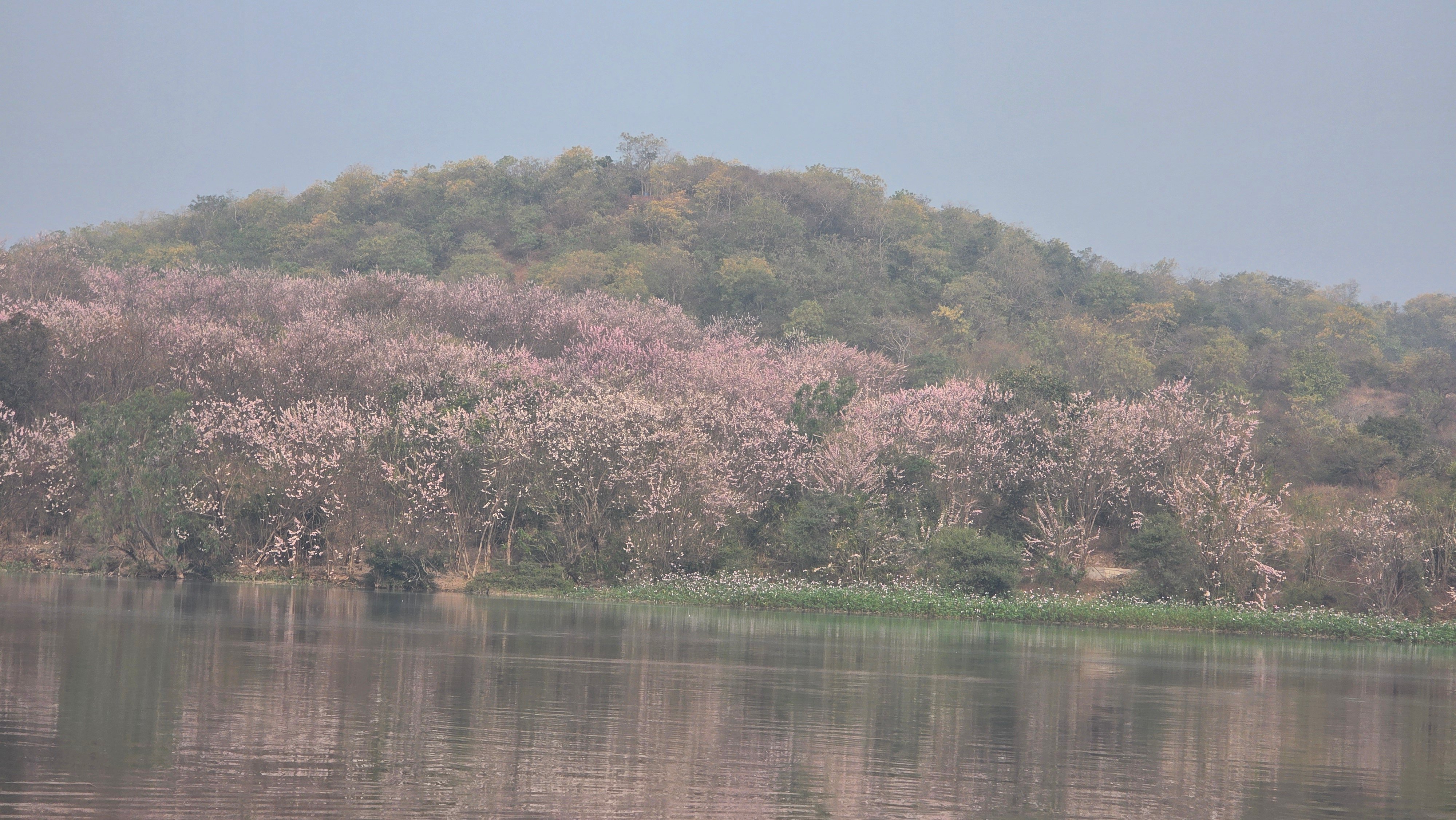
For blackbuck, grass is food and shelter. It is in high grass that they drop their fawns which are totally vulnerable for a few hours after birth. If there is no grass to hide them, they become prey to the village dogs that know when the blackbuck foal and they are waiting. They have no chance of catching an adult buck or doe, but a newborn fawn is food off a plate. Long grass is a lifesaver for fawns, but Gliricidia kills the grass.
Ironically in the Blackbuck Sanctuary in Bidar, Gliricidia was planted by the Forest Department, which seems to have a love for planting all kinds of invasive foreign species in any vacant land in the name of reforestation. They have a rich history of expensive mistakes with planting Eucalyptus and Acacia. But I guess learning is not easy or quick. So, now we have another disaster in Gliricidia. The combination of Gliricidia and village dogs is far more deadly than wolves or leopards and it is anyone’s guess how long the blackbuck can survive as a reproductively viable population.
Village dogs are a problem peculiar to India. They belong to nobody, they hang around places where they can get food, they form packs and hunt, and prey on anything they can bring down. There are many accounts of packs of dogs attacking and killing and eating people.
The usual governmental response of catching stray dogs and sterilizing them is not a solution because the problem is not only breeding but much more urgently, the daily food requirement for the dogs. Even a sterilized dog needs to eat. Dogs are apex predators and hunt in packs. In places like Ladakh for example, in the tourist season there is a lot of food waste thrown out of restaurants and hotels which these dog packs feed on. But in the winter, there are no tourists and hotels shut down. But the dogs are still there. That is when their instinctive pack behavior kicks in and they hunt anything that moves. Domestic animals, nesting birds, and humans. In the case of blackbuck, stray dogs are their nemesis. There’s no escape. Stray dogs must be eliminated. If anyone loves stray dogs, they are welcome to take them home and raise them as pets. But ownerless dogs have no place on the streets, free to be a menace to the defenseless. In this case blackbuck. Blackbuck are highly endangered and need far more protection than they have at present.
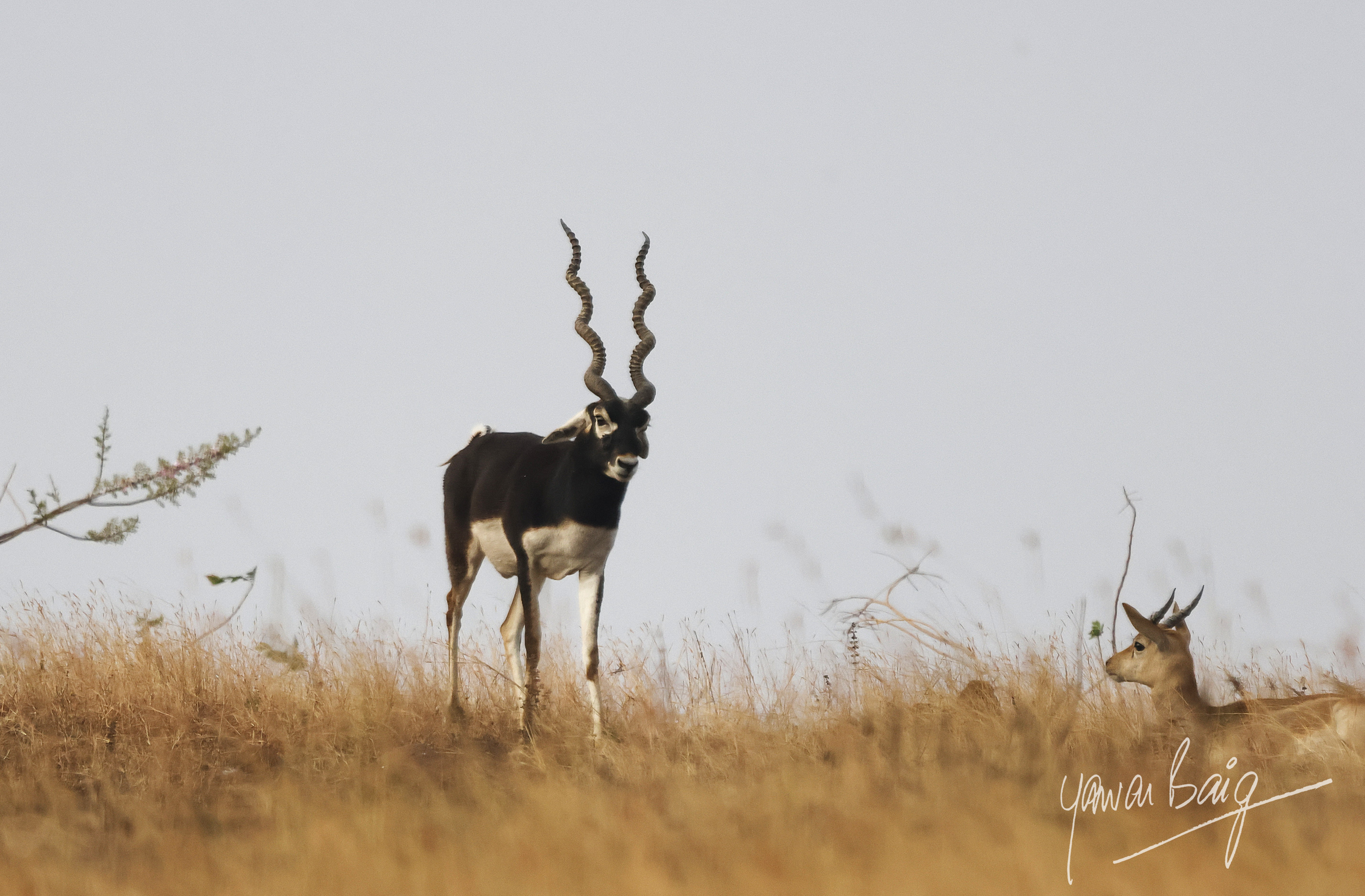
The big buck surveys his realm and his harem. This is a group of does led by an older female which he overlooks. He trots around them and chases back any female that wanders off. He holds his head high with his nose in the air, much like a certain orange head of state we are all familiar with.
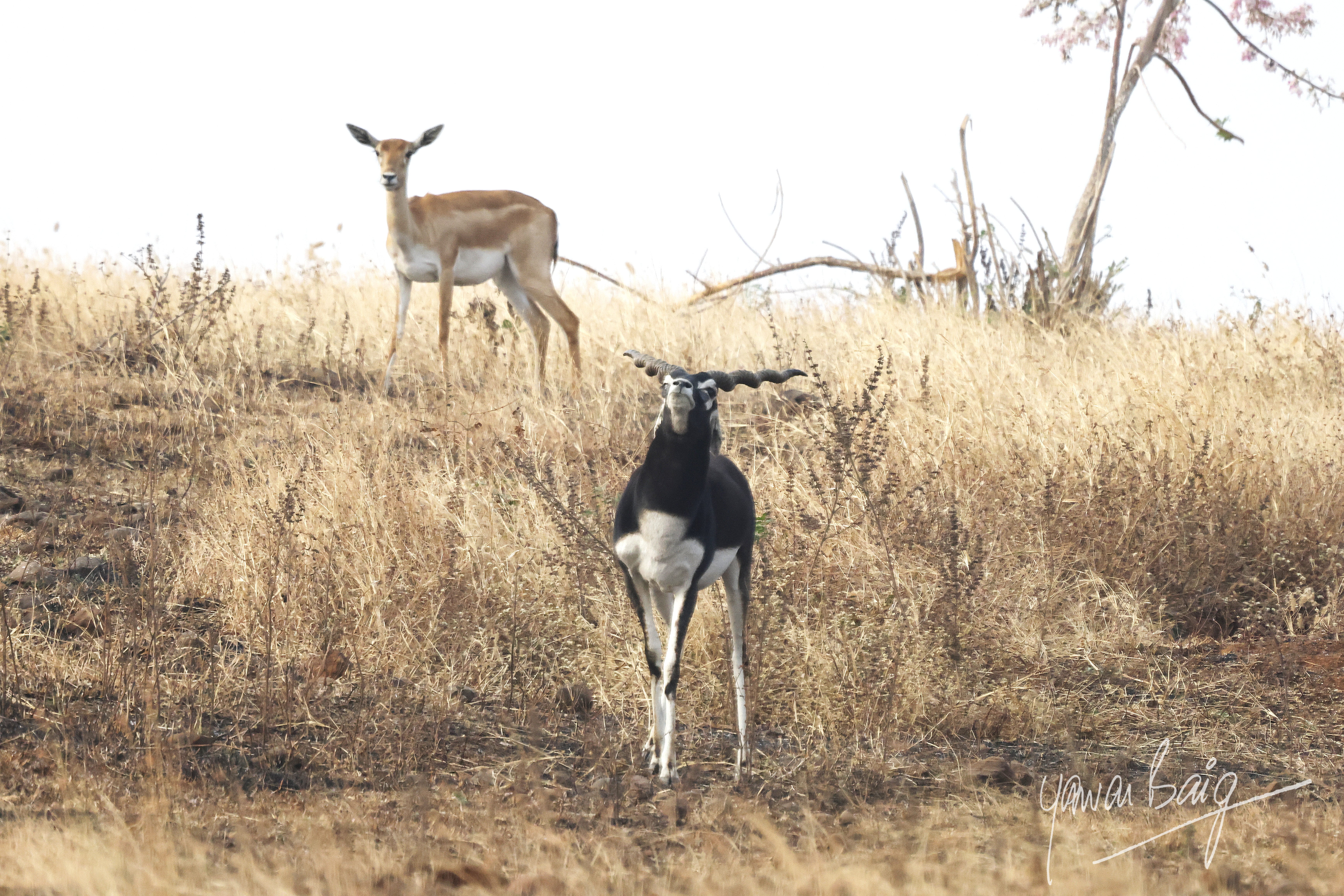
His long, spiral horns with their tight curls ending in sharp points are almost parallel to his back as he struts along in a bouncy trot. Every time a female urinates, he is there to taste and assess her readiness to breed. Then off he goes on this circuit ensuring that all his family are with him. There are two or three family groups that I could identify. Each with its dominant buck, strutting around the group.
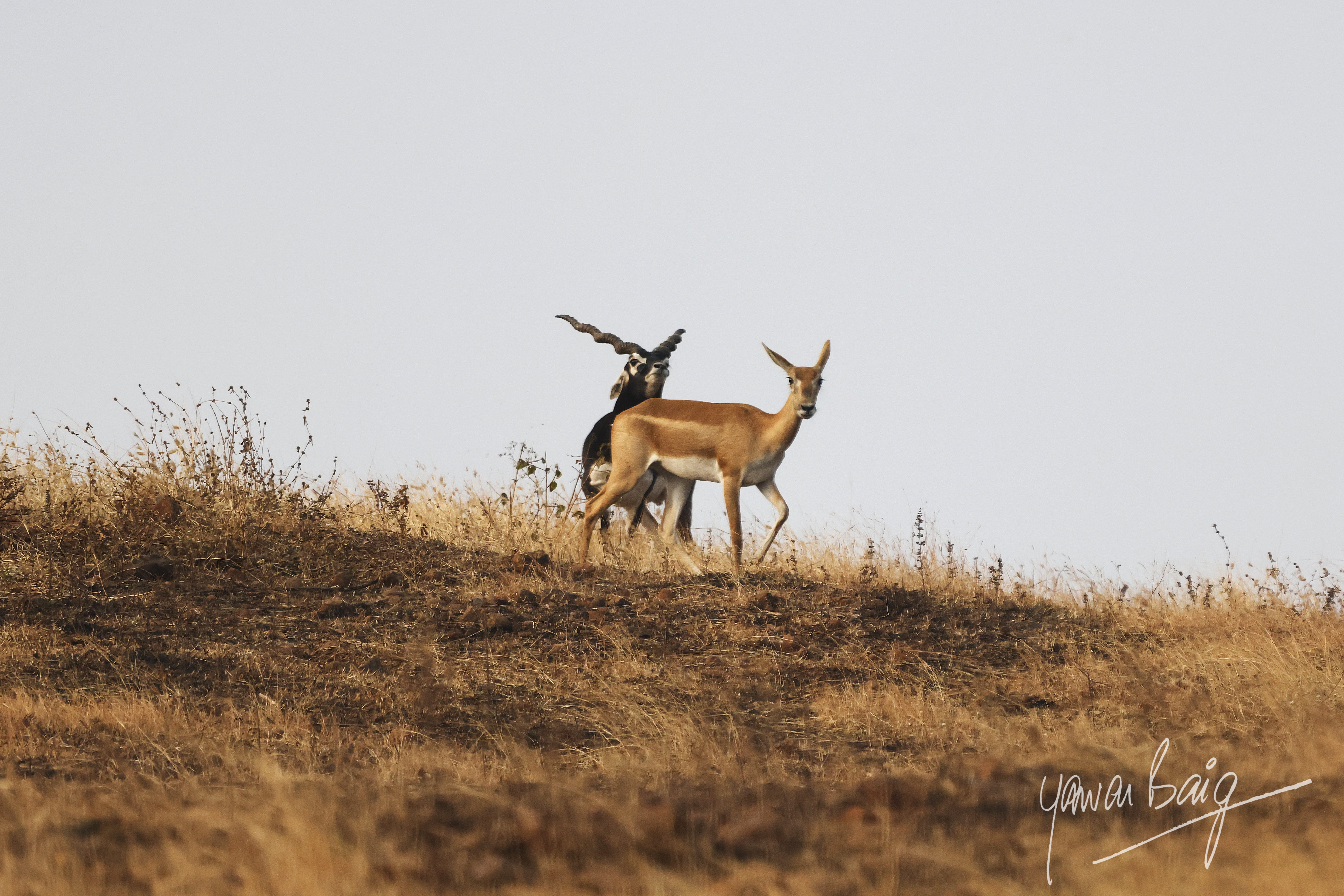
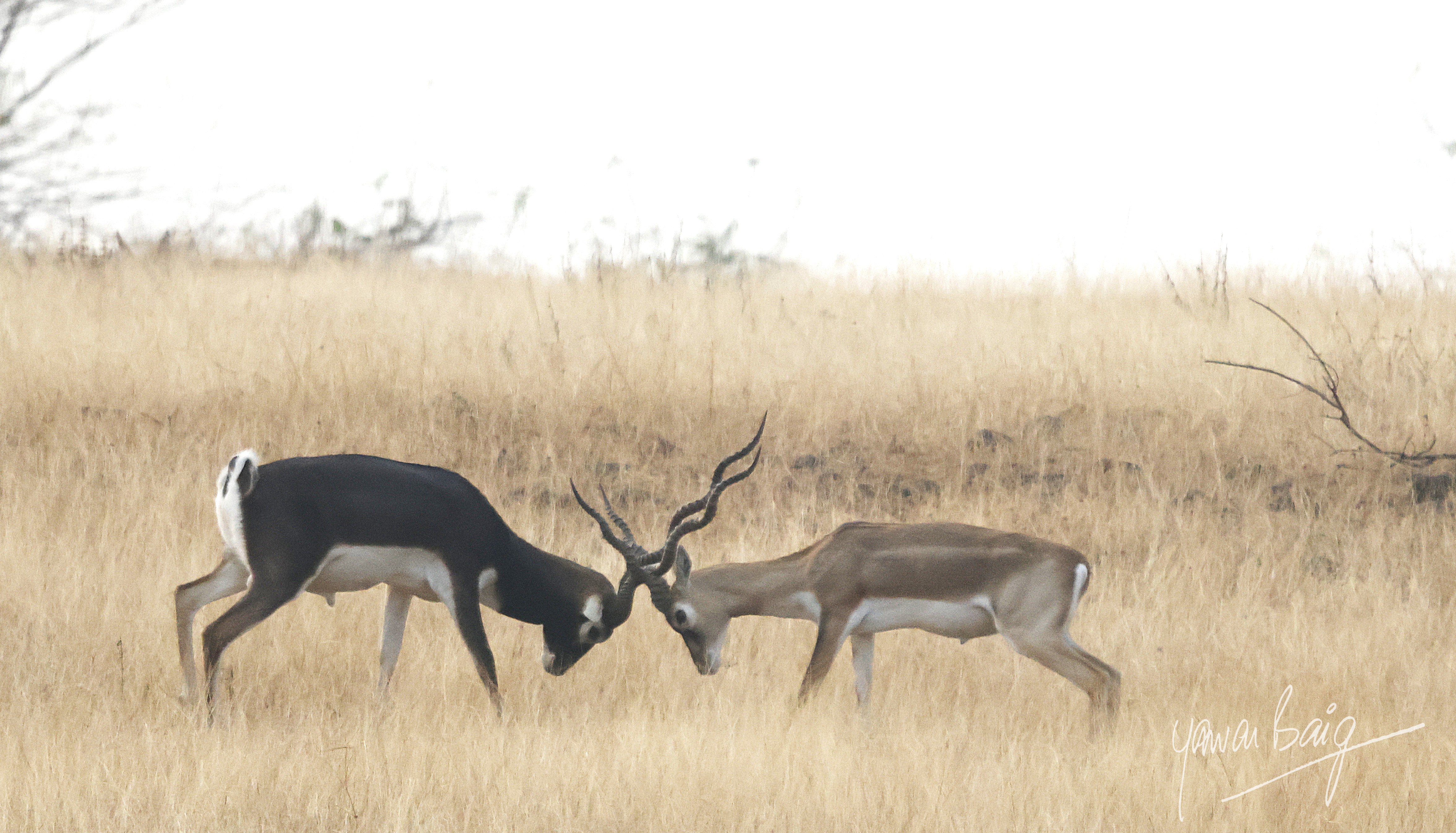
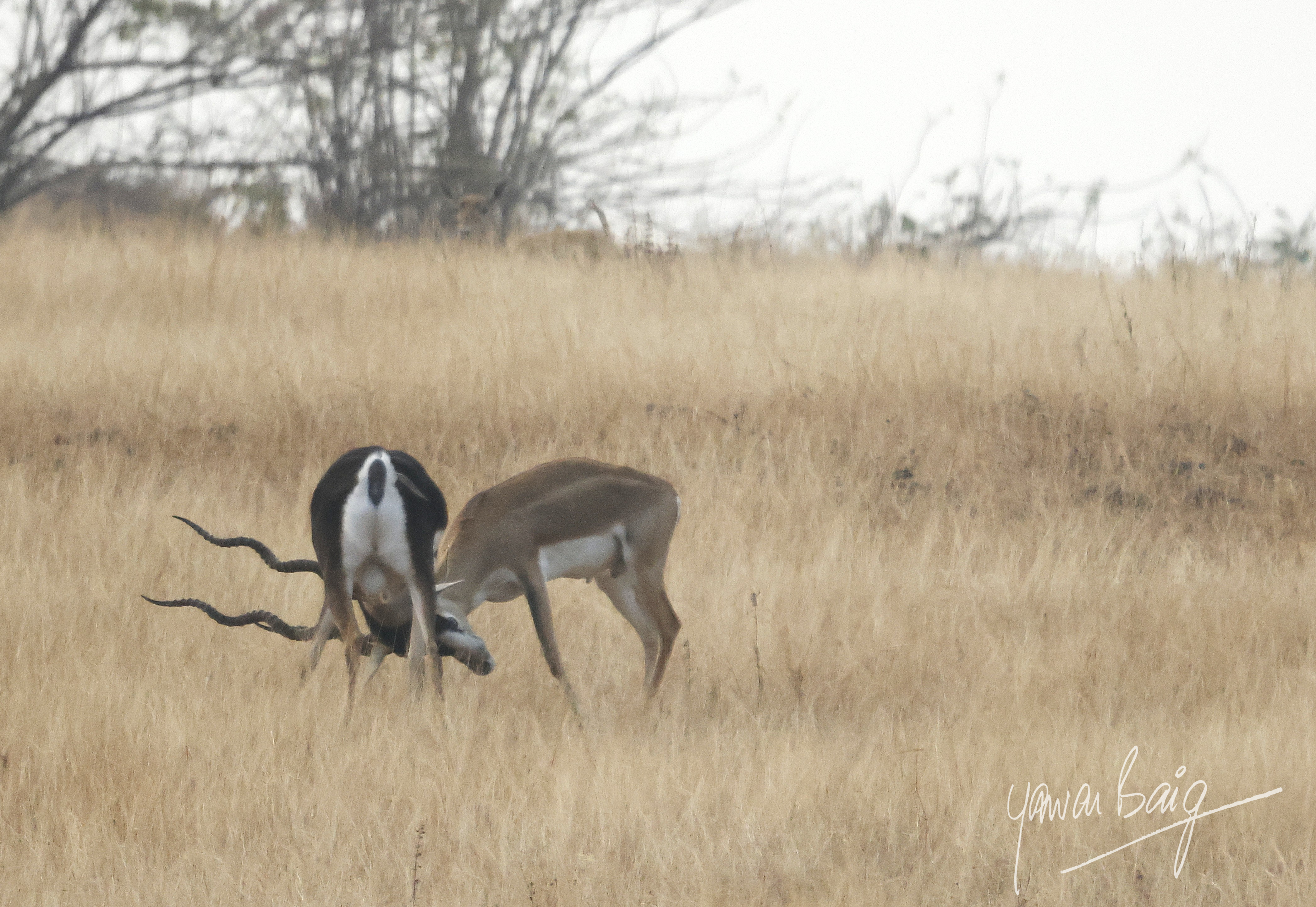
Then there is a group of juvenile bucks with smaller horns. There are no females with them, and they keep to themselves and don’t tangle with the dominant bucks and their harems. Horns are status symbols which announce a buck’s virility and suitability to breed. Bucks with longer horns are more likely to get a chance to breed than ones with shorter horns. The juveniles have a way to go still. Horns are certainly ornamental and one of the reasons why these beautiful antelopes were hunted almost to extinction. Today they are highly endangered and protected but there are poachers willing to take the risk. But the main reason for the horns is protection and domination. In the rutting season, there are magnificent duels where the one who is strongest and has the longest horns and fighting experience, has the highest chance to breed.
It is early in the morning and there is dew on the grass. That is the main water source for blackbuck. The air is crisp with a minute nip in it. I can hear the call of the Grey Francolin (aka Grey Partridge or Teetar), one male answering the challenge of another. Paddy-field Pipits and Larks are flying in flocks, hunting insects which have started to rise from the grass. There are Green Bee Eaters, sitting on sticks or rocks, taking flights to catch an insect in mid-air and returning to their perch as surely as clockwork. That makes them easy to photograph. You just wait for them. Larks soar singing into the sky and then swoop down to whichever perch they have identified, their song echoing in the dawn. The sun has not shown itself yet but the glow in the east is its herald.
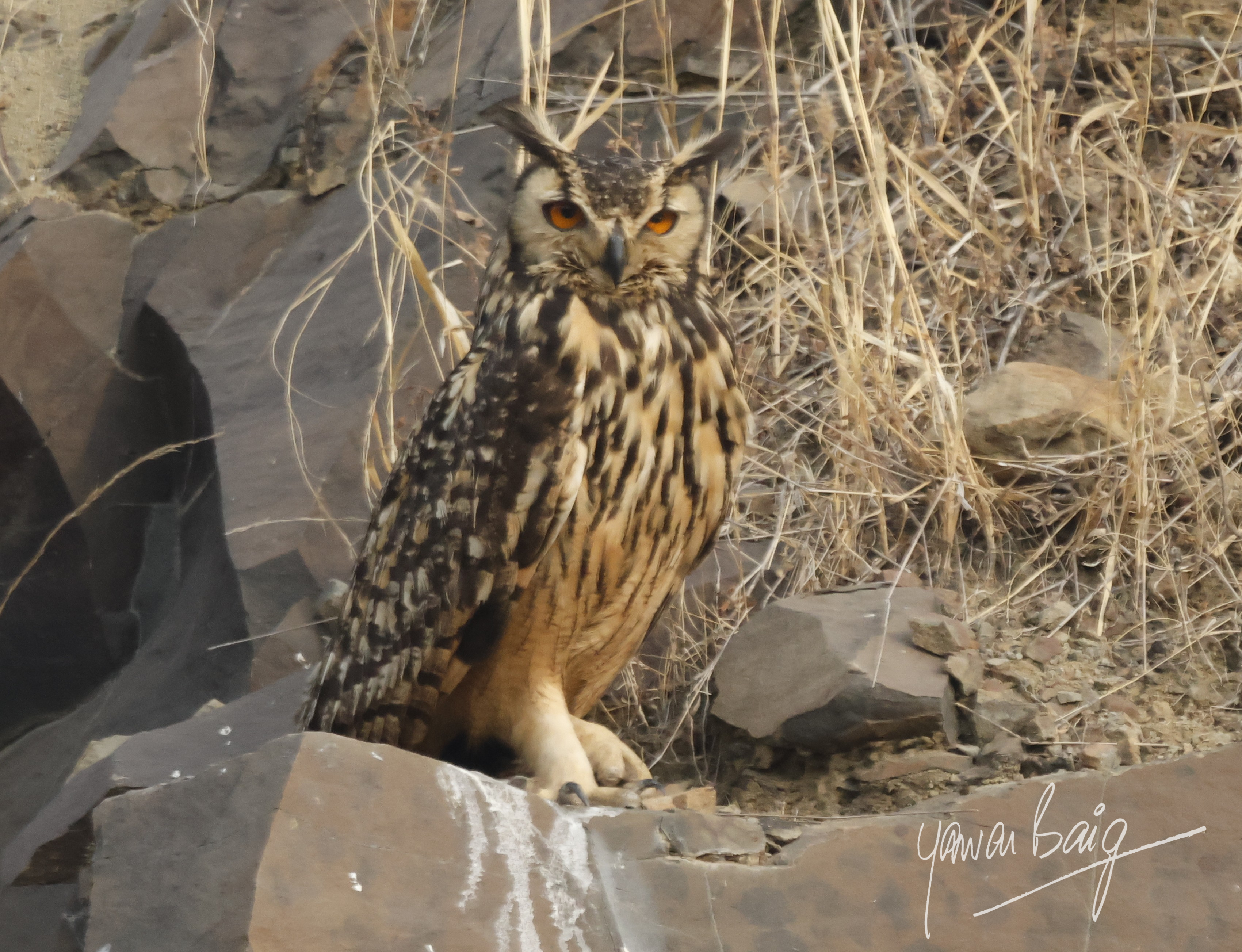
In a nearby quarry which has a large pool of water, there is a telltale ‘whitewash’, of guano coloring the rock side of the quarry. This means that that there is possibly an Eagle Owl (Bubo bengalensis) perch there. And sure enough we saw a magnificent specimen, a large female (my guess based on size because the genders are almost indistinguishable by color), glaring at us. Her golden-yellow eyes seem to bore into you. Her massive legs and talons make me very thankful that I am not small enough to be her prey. Not nice to be killed by a bird. There was no nest and I never saw the male, but I guess they will nest in the same place.
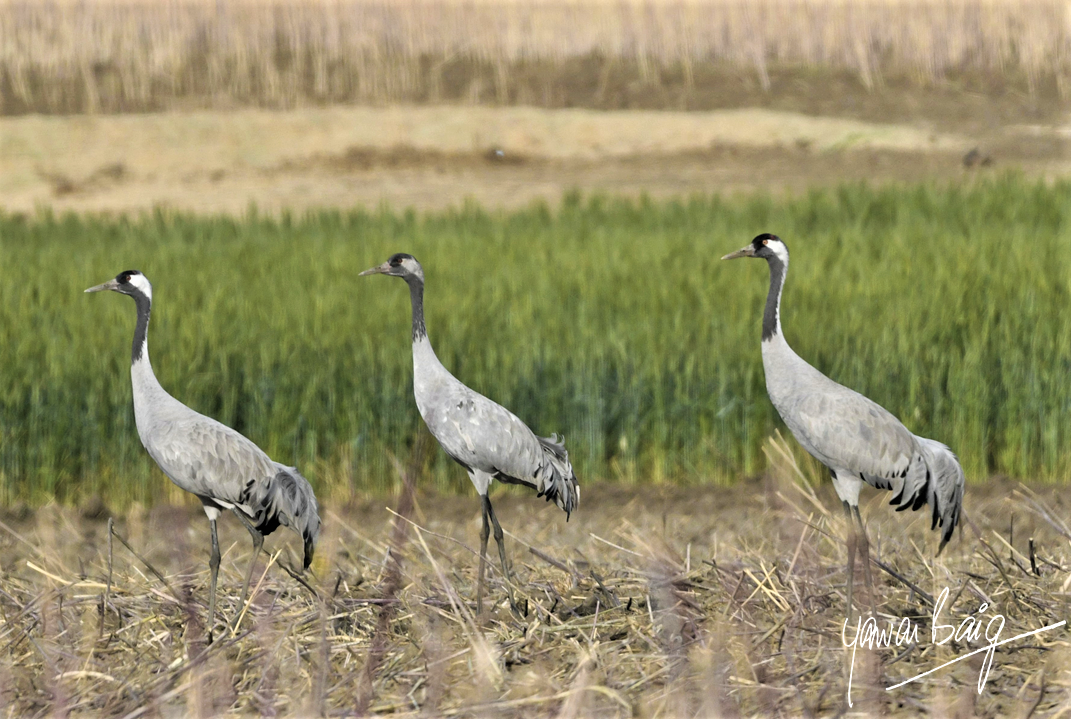
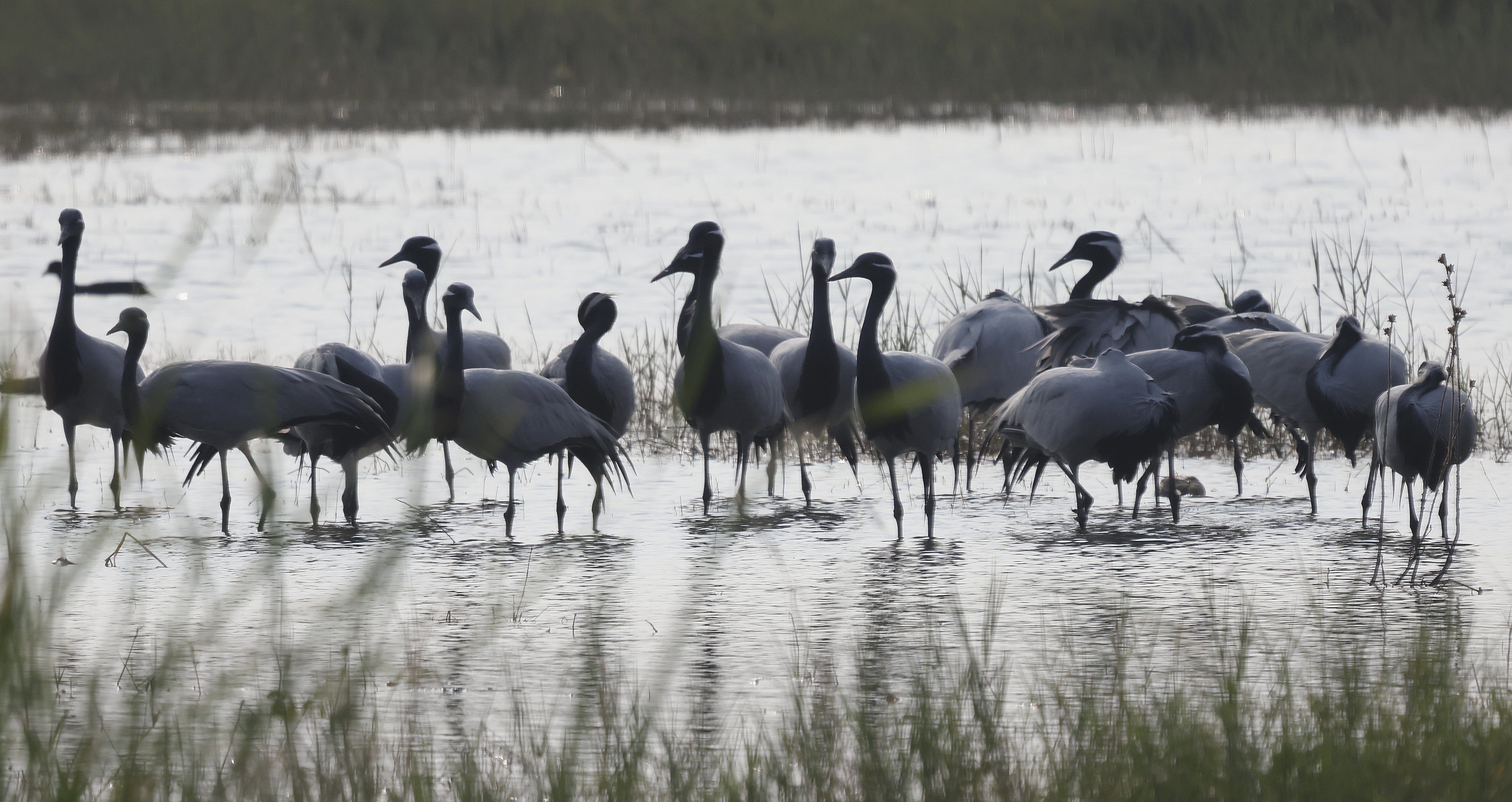
About twenty kilometers from the Blackbuck sanctuary is the Karanja Dam on the Karanja River. The backwaters of this dam are host to flocks of Demoiselle cranes (Grus virgo) and Bar-headed geese (Anser indicus). Demoiselle cranes migrate annually to India from their breeding grounds in Central Asia, Mongolia and Siberia, flying at heights of 16,000 – 26,000 feet over the Himalayas. There they are exposed to the hazards of high altitude flying and attacks from Golden Eagles which wait for them as they come over the mountains. The Eagles hunt in pairs and can bring down even a large bird like the Demoiselle crane. A small number fly to the backwaters of the Karanja Dam in Bidar where I saw them. Unfortunately, the sun was in my eyes which is the worst possible light for photography and there was no way to get to the other side to get them in better light. Nevertheless, I was thrilled to see them.
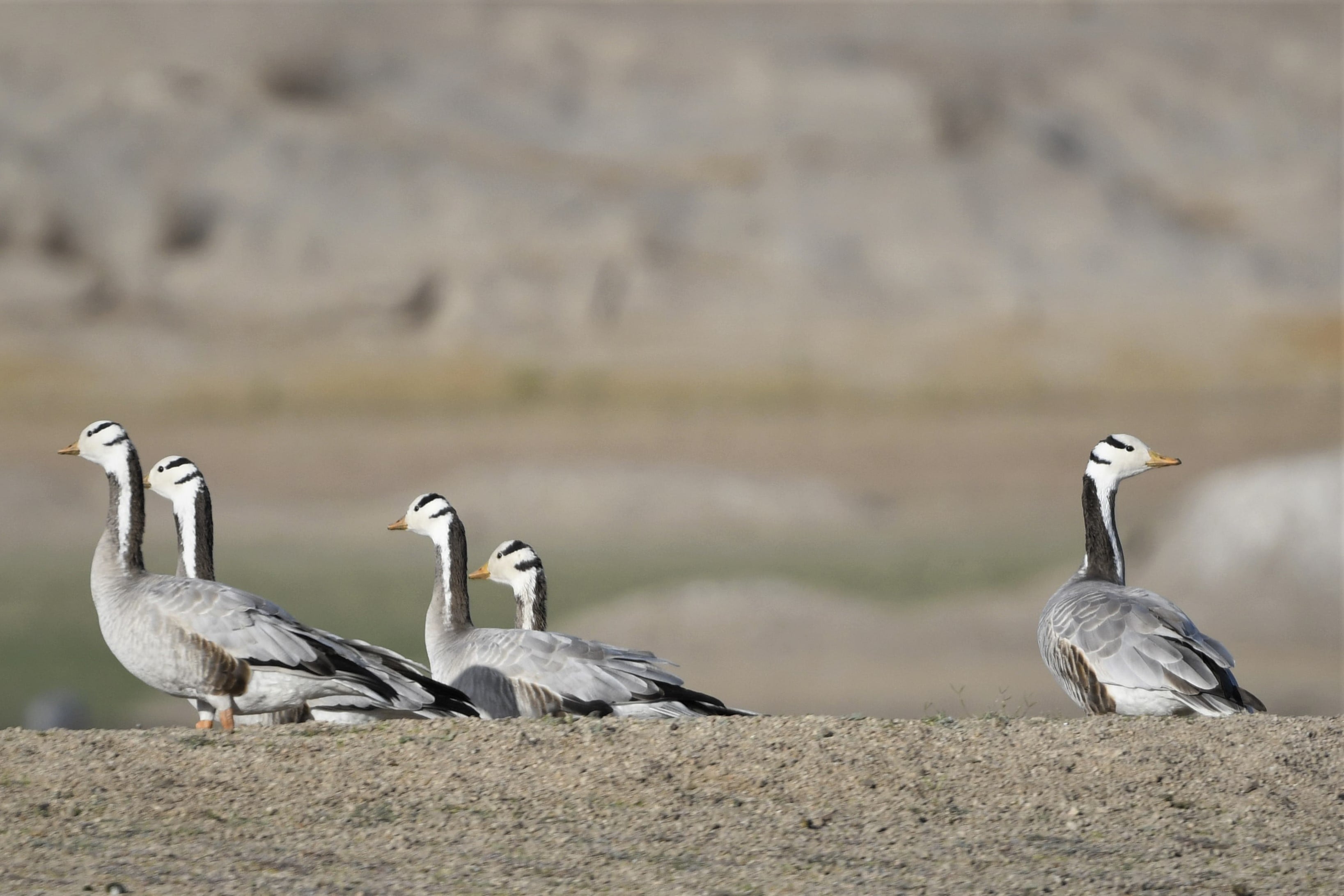
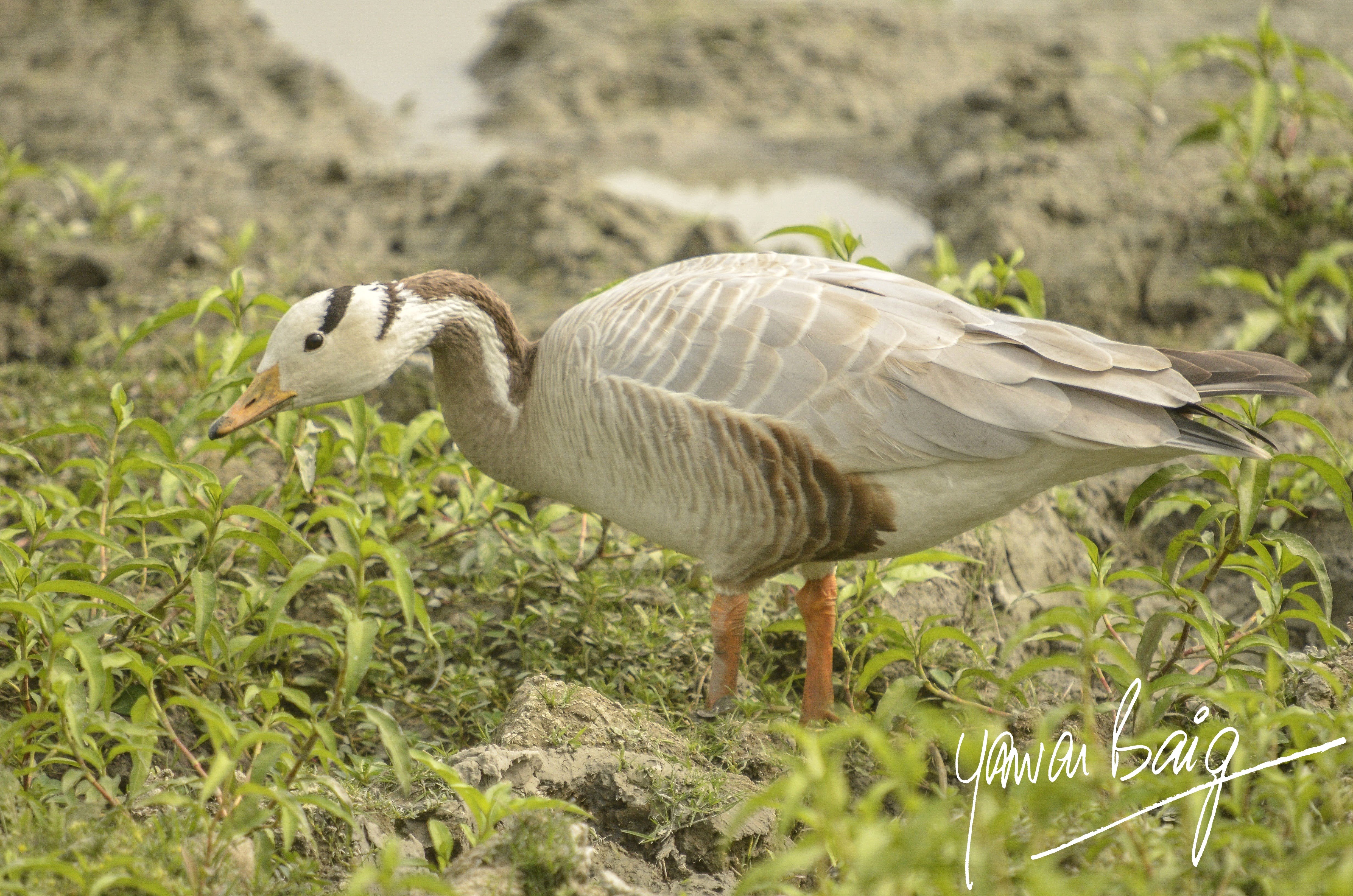
As for Bar-headed geese are among the highest-flying birds in the world. They migrate from Central Asia, Mongolia and Siberia to the Indian subcontinent (India, Nepal, Pakistan) each autumn. They travel 3000 miles by flying at an altitude of 20-30,000 feet and more, in the Jetstream current at a speed of 1000 miles in a day. They cross the Himalayas, often at altitudes above 7,000–8,000 meters, to winter in warmer, cultivated wetland areas, returning north in spring. I have photographed them in Assam in Kaziranga and Manas National Parks. And now I saw a very nice sized flock in the backwaters of Karanja Dam in Bidar.
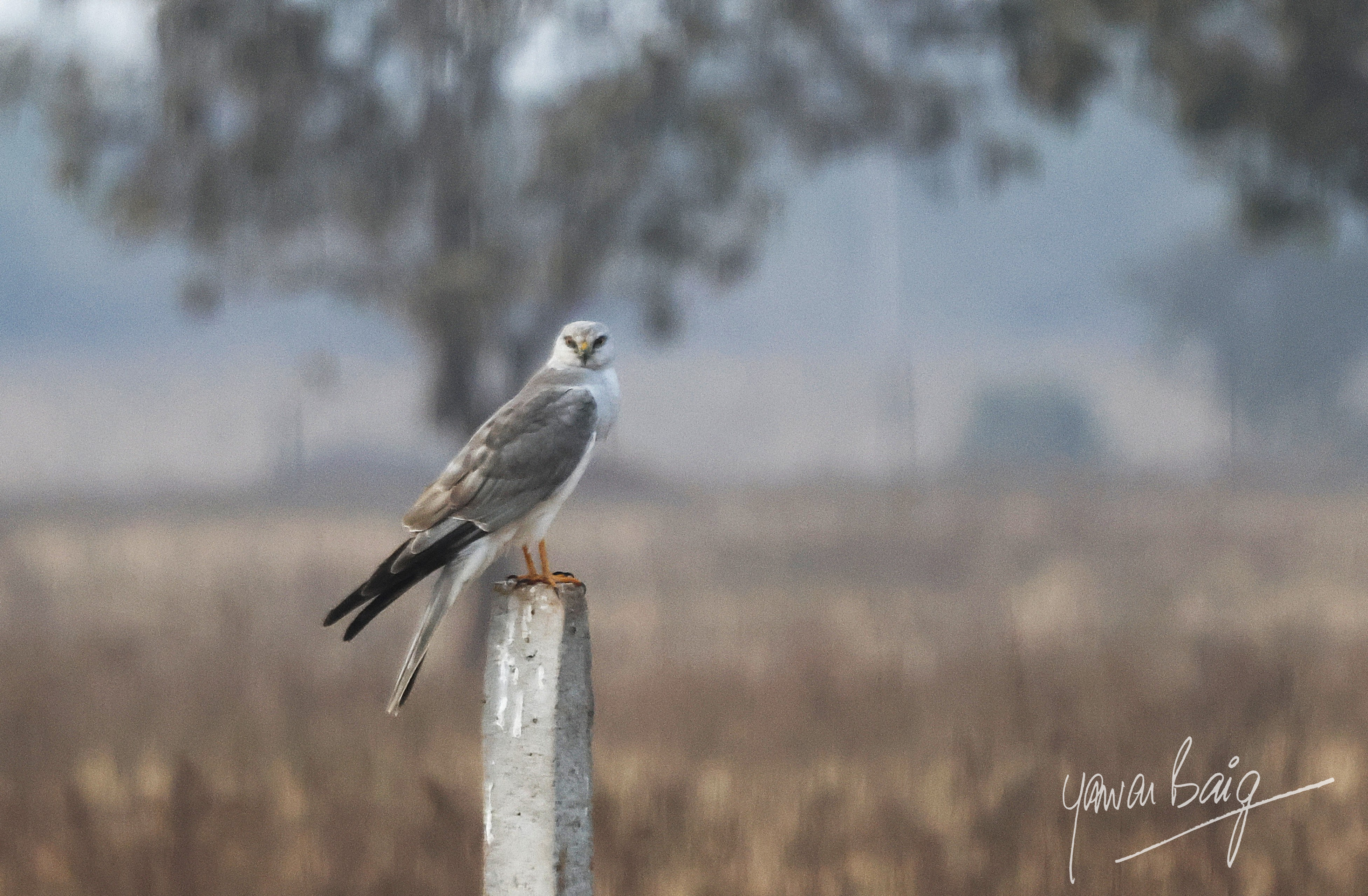
On the way back home to the Blackbuck Resort, our driver/guide/naturalist, Mr. Raghu asked if we would like to see Pallid Harriers (Circus macrourus). I was obviously delighted at the possibility. And sure enough we saw about eight or nine of them, sitting on fence posts scanning for prey. They make very low-level swoops across the fields looking for rodents, such as mice, voles, lemmings, ground squirrels, small terrestrial birds like Larks and Paddyfield pipits (Anthus rufulus). They also hunt lizards, other small reptiles, frogs, and insects, such as locusts and dragonflies. Harriers are also endangered thanks to grassland destruction, overgrazing and human interference. Same sad story everywhere that we humans live. It is always wildlife that suffers the consequences of our way of life.
Mr. Raghu is a very interesting man. He lives in a village less than two kilometres from the resort. In his own words, which I am translating into English, ‘I am not educated Sir, and I joined the resort as a cleaner. Then one day I met a guest, as senior citizen like yourself, who told me that you don’t need a college degree to succeed in life. If you are interested, you can succeed in anything you want. He gave me a book of Indian birds. Today I can identify more than 600 birds and mammals.’ Amazing man, Raghu. Very kind, considerate, helpful, and with beautiful manners. Incidentally the Blackbuck Resort, Bidar has the most dedicated group of people that I have ever had the pleasure of meeting.
As the light started to fail, we made our way back to the resort, knowing that hot pakodas and ginger tea awaited us. Wearing my Leadership Consultant hat, the Blackbuck Resort in Bidar is a classic example of what the combination of recruiting the right people and putting them under the right manager can achieve. The manager is Mr. Shivkumar whose impeccable manners, concern for the guests, and excellent interpersonal skills have created a winning team that leaves you impressed. Mr. Siddappa, the Naturalist is another example of someone like Raghu, who loves his job. It is not ‘work’ for him. He loves birds and wildlife. He is a stargazer who loves the stars and being with them, and learning about them. When these two gentlemen show ‘their’ birds and mammals to people, it is with such a sense of personal discovery and pride that it leaves you smiling.
I wish them all the very best and hope to meet them again soon.
Comments (0)
Please log in or sign up to leave a comment
Loading comments...